Showing posts with label human rights. Show all posts

Wednesday, November 1, 2017

Week 6 - “Wildlife” and the Harmonious Ideal of Ubuntu

By Michelle Andersen
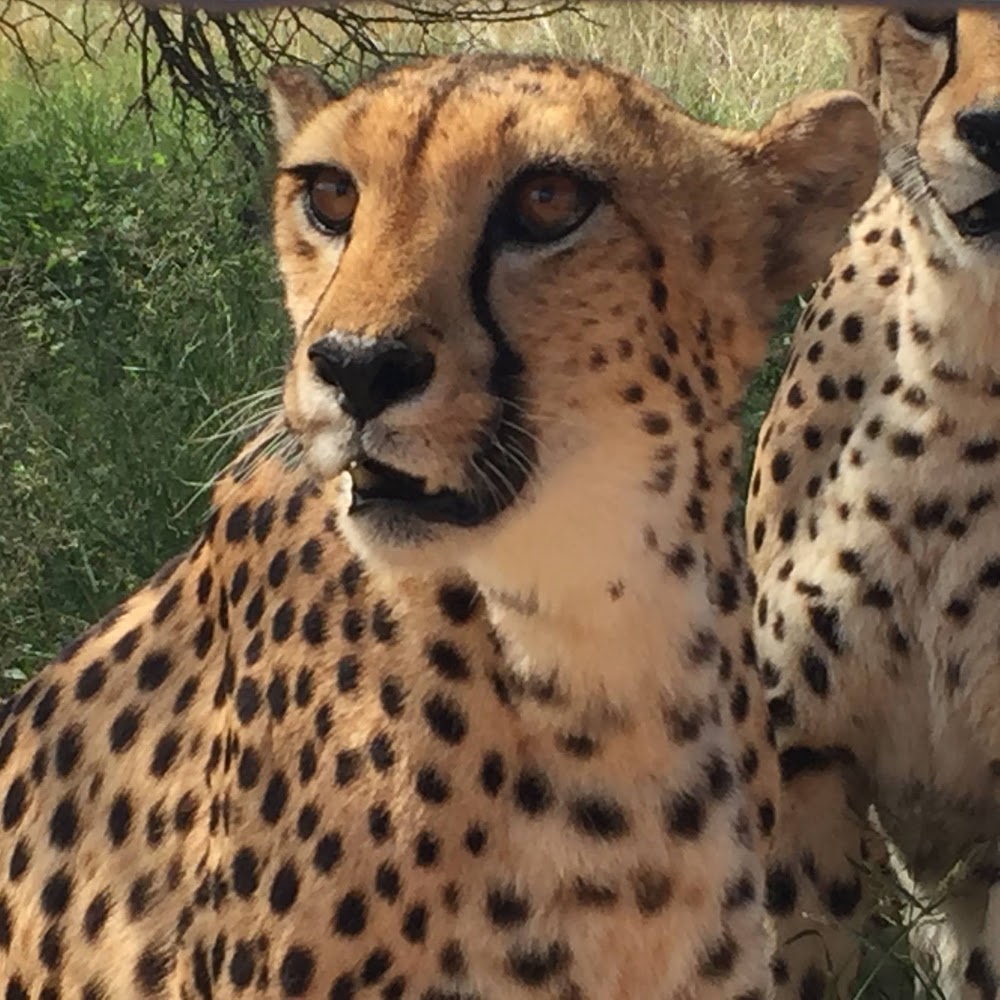
This cheetah and her sister are tame and used to humans,
when they should have grown up in the wild

The week started out with a trip for Environmental Connections to N/a’an ku sê Wildlife Sanctuary. It was established in 2006 by Dr. Rudie and Marlice van Vuuren to conserve wildlife, preserve landscape, and support local communities, specifically the indigenous San people. Their mission is to promote “conservation through innovation.” The animals there have been orphaned, injured, or otherwise had their safety threatened by humans. In class, we are learning about human-wildlife conflict, which was evident during our visit. The various animals have been saved from humans who shot them, touched them as cubs, or have had their habitats and lives threatened by humans in another manner. While it was incredible to see one of my favorite animals, the cheetah, up close, it was heart-breaking to see them interact with the guide. The cheetah would come right up to the fence and let the guide pet her. You could hear her and her sister purring loudly the whole time. Unfortunately, these animals are here because their mother was killed by a farmer and they could not survive on their own. They have been raised by humans, which makes it dangerous to return them to the wild for themselves and for the humans, whom they no longer fear. They are sentenced to a life imprisonment, due to the actions of humans. While the sanctuary is doing good work in order to save these animals, they are merely trying to compensate for decisions other people have made. Since these animals can no longer be released into the wild, they will never be able to live out their lives as intended.
A night out at a local restaurant
Later in the week, in our religion and social change class we had a speaker named Reverend Godriam join us to discuss the subject of Ubuntu. Ubuntu is defined in the dictionary as “a quality that includes the essential human virtues; compassion and humanity.” In a paper by Faustin Ntamushobora, we read about the role ubuntu has played in African history. The concept was popularized by Archbishop Desmond Tutu and through him, Nelson Mandela, especially when it came to reconciliation. According to the article, reconciliation can be defined as “respect for a person’s dignity, irrespective of what that person has done.” Without ubuntu, one could refuse to forgive their enemies. Using the compassionate care of ubuntu instead, one would be able to create harmonious relationships. In a discussion I had with our professor, Lamont, we discuss how the concept of ubuntu is something to apply in our lives. If everyone cares for one another, then the world would be a happier, safer, more unified place. However, we had doubts about how this could be applied on a larger, macro scale. It is clear that one could apply the concept on a micro level with their inner circle. Yet, beyond that, it is hard to achieve this unity when people are asked to apply it to the whole world. It is impossible for every person to be open and available to other people all the time. However, if people can begin with their close friends to have harmonious and compassionate relationships, then perhaps this can be extended out to everyone they met, who will then also act with ubuntu. However, until that point is reached, it seems like a worthy ideal to strive for so that the world is still a nicer place, even if true ubuntu is never reached.
 
Based on this week’s experiences, I have deeper concepts to ponder and apply to my own life. It can be easy to get swept up into the excitement of an event, such as seeing wild animals at a sanctuary. However, it is important to take a step back and ask questions about how they got there, how they are being treated, and the purpose of the organization. Without this critical thinking, we may miss a chance to not only learn about but to improve a situation. Along with this, we must consider ideals that are above ourselves. Striving for harmonious, compassionate relationships through ubuntu can create a better world for those involved. If we do not try to promote these actions, then we are failing our world and each other. While it may seem impossible, it is not pointless to fight for these ideals, which can raise us to a higher standard.


Even in captivity, one can see the power the lion possesses

Friday, September 8, 2017

Week 1: Breaking Stereotypes

By Keith Nagel

Stereotypes of a place are easy to recognize and hard to forget. The images that I expected to see upon arriving in Johannesburg, South Africa were immediately challenged, strengthened, and altered by what I saw in front of me. Johannesburg is a city in transition, a transition that began in 1994 and has continued to this day. The mainstream media’s mantra of a starving and forgotten Africa is in small part truth but in large part far from it. There is clearly wealth in South Africa. Even before I stepped foot on the continent I saw the gold mines scattered around the city of Johannesburg. The wealth from the countries resources I would soon learn is unequally shared among the population, leading to some of the highest inequality in the world.

A dilapidated hostel in Soweto stands in sharp contrast to the 
government houses that were left empty after poor policy
implementation.
While touring Soweto, a particularly infamous township in Johannesburg, Molefi our local companion gave us a clear picture of the history and current conditions in the community. The picture was one that puzzled me. I came expecting extreme poverty, and there were certainly pockets of poverty that no human should be stuck in. However, I did not see the stereotype of poverty that I had expected, instead of shacks I saw houses nicer than my own and business centers sprawling with activity. There is much work to be done in the townships but I would argue that there are pockets of poverty in many parts of the United States that would rival those in Soweto, particularly in immigrant labor camps and Native American reservations. This realization put into perspective that although conditions are tough in South Africa, there is certainly hope in strengthening the middle class in Johannesburg if the inequality train does not run off the tracks.

A picture with our host family in Soweto, the Nkosi family 
welcomed us with open arms. Getting to know the community 
through their eyes was an unforgettable experience.
My confidence in the community was only strengthened by my homestay with Mr. Nkosi and his lovely family. Staying in Soweto for a time, engaging with friends and neighbors in the community, and learning from both young and old residents of Soweto revealed to me that the conflict in South Africa is no longer along racial lines, but along class lines. There is a clear divide between the have and the have not’s. Community leaders that we visited in the Orange Farm region blamed globalization and the capitalist system for the country’s woes, while a guest speaker and the youth that we spoke to blamed aging leadership in the ANC. The ANC brought South Africa out of a long oppression under the apartheid regime, but many believe that the African National Congress is holding the country back.


The wealth disparity was clearly evident in the extravagance 
of Sandton mall, which was a departure from the poverty 
we had seen earlier in our tour. 
A short visit and presentation at the U.S. Embassy in Pretoria showed that the United States is very interested in continuing to strengthen economic and political ties with South Africa in order to foster a better economic environment for the many U.S. companies in the country. This is good news for the South African government as trade with the U.S. is an essential portion of their GDP, however where that wealth ends up is another question altogether. One must look no further than the wealth disparity between the poor townships of Soweto or Alexandria and the extravagant luxury of Stanton to realize that the wealth in Southern Africa does not trickle down as one would hope. The good news is that from what I have seen, South Africa has far more wealth than I expected, though the elephant in the room is how is the wealth to be shared in such an unequal society and whether or not the current political climate is fostering the necessary environment for continuous change. These are certainly questions worth exploring further.


Tuesday, October 25, 2016

Week Four: Hooked on Windhoek: Introduction to Namibia

by Jeremiah Chamberlin & Hannah Johnson

At the beginning of the week, the CGEE group had the opportunity to engage with students from the University of Namibia (UNAM) in an informal discussion. This became an invaluable experience; for many of us, it was the first time we were able to interact with Namibian peers and dually analyze some the experiences that have shaped our lives as students. The topics of discussion ranged from our favorite hobbies and involvement in campus life, to deeper issues such as racism and discrimination on campus.

One of the topics that emerged from conversation are the barriers to accessing education at the collegiate level. For many of us at CGEE, we echoed the idea that financial considerations present the largest challenge in the United States, compounded by the realities of institutional racism and economically diverse backgrounds. From the perspective of the UNAM students, race did not play as important a role in college choice and acceptance rate. However, they did emphasize the role of the education system in Namibia, especially concerning regions outside of Windhoek. It was surprising to learn that the quality of teachers and curriculums is low in many regions, and this has impacted the demographics of students that attend college. For example, particularly in the Northern regions, teachers are underpaid and schools are understaffed. From both the US and Namibian perspectives, we were surprised on how many similarities we were able to draw between education systems.

On Tuesday, our group spilt into subgroups to explore the various facets that Katutura, a former black township in Windhoek, has to offer. We received itineraries for the day and were accompanied by guides from Young Achievers, a local youth organization. On this ‘Katutura Quest,’ we visited a diversity of both government and non-government organizations and programs that are involved in the community. One such program is the Katutura Community Arts Center, which is open to the public. Within the arts center is the College of the Arts (COTA).

During our tour, we had the opportunity to sit in on a staff/student meeting where the changing financial policies of the college were discussed. Many of the challenges that small colleges face while moving forward are connected to some of the topics we discussed with the UNAM students on Monday regarding education. Among the concerns is the increasing cost of tuition as a government-subsidized college, which has put pressure on many students of low-income backgrounds.

In our interview with Joost Van de Port, head of the Media Department at COTA, he explained that the college and students need be able to gain more agency to receive national recognition from the state. Currently, COTA is not listed under the Ministry of Education, and therefore, not seen as a priority. As Van de Port explains, the college is in the process of gaining status to be listed under the Ministry of Education, which allows greater funding for the college, particularly from the National Arts Council. Van de Port claims that media literacy, particularly under the department of the Media, Arts, and Technology, is crucial for all Namibians to learn. 

Those of us with internships began officially on Wednesday, with a full day at our individual organizations. These included The Namibian Chamber of Commerce, Planned Parenthood, Namibian Women’s Health Network, Friendly Haven (for victims of domestic violence), along with a number of others. Because many of these organizations work with vulnerable populations, these first few days of interning were emotional for some individuals. For a few of us this meant hearing heartbreaking stories of domestic abuse; for others, it means coming face to face with the inadequate funding and understaffing of specific educational institutions. Naturally, it’s not all negative; there are organizations like Sister Namibia which are doing incredible work to empower Namibian women in surprising ways, while simultaneously challenging gender stereotypes. Collectively, these shared experiences are giving us a fuller, more complex understanding of the Namibian story.

One of the highlights of this week would have to be Thursday’s ‘Community Day’, held at the Elisenheim Guest Farm. While we may have complained about waking up early, the day became an insightful opportunity to reflect on our experiences. The day also gave us the chance to get closer to those we are sharing our experiences with, especially other members of the CGEE staff (specifically Evelyn, Jenobie, Sarah, and Passat). Initially playing games like ‘Seven’ (learned from our Katatura tour guides), the day began on a relaxed, informal note. We shared simple secrets about ourselves, like facts about our families or our favorite memories. It was a welcome reprieve from the emotionally intense schedule of Johannesburg. 

Elisenheim Guest Farm on Community Day.
ables are set up for our various identity stations.
However, as the activities progressed, the subject matter became much more personal. Entering ‘identity stations’, individuals were asked to share in small groups their personal feelings on aspects of their identity, such as race, religion, sexual orientation or gender identity, class, and nationality. Many of us were reduced to tears in the process of hearing each other’s deeply held thoughts and emotions, yet the overall sentiment was one of openness and acceptance. 

Friday marked the first day of actual class: Race and Resistance in Southern Africa and the US taught by Albertina. This included a field trip to the Owela Museum, which records the lifestyles, cultures and practices of Namibia’s indigenous tribes. The museum also addresses some of the injustices faced by these groups, like those suffered by the San people. Dubbed ‘Bushmen’ by early German colonizers, members of the San were considered evidence of the ‘missing link’ theory connecting apes and humans. In an effort to record data on what they considered an evolutionarily incomplete group, German ‘scientists’ made molds and casts of San people’s faces and body parts. Skewed information was then published, propagating racist narratives of white supremacy which are sadly still influential even today.

Molds of actual San people created for the Germans'
racist interpretation of the 'missing link' theory.
Despite the tragic reality of colonization and discrimination, the Owela museum remains an important place for appreciating Namibian history and heritage. Named after a board game common among many Namibian tribes (similar to Mancala), Owela stands as both a tangible and symbolic representation of the larger Namibian identity. The shared story of the nation is as beautifully haunting as the unique communal experiences which are braided into its past. As we acclimate ourselves to this new environment, we begin our journey backwards in time to the tumultuous formative age of disillusionment.

Tuesday, August 23, 2016

Week Two: The Unseen Colors of the Rainbow Nation

by Imani Briscoe & Kitty McGirr

I remember waiting for my flight not two weeks ago genuinely envisioning what this “rainbow nation” was going to look like once I landed in Johannesburg. Now as we conclude our time here in South Africa, I am beginning to appreciate that what lays beneath this widely propagated ideal is much more complex, nuanced and problematic than the romanticized image I and many others with a similarly elementary understanding of post-apartheid South Africa would imagine this so-called rainbow nation to be. 

The varied nature of our activities and conversations on the program so far is indicative of the diversity of views and circumstances among the people of South Africa. However, while at face value this diversity supports the dominant narrative of South Africa as a rainbow nation, upon closer examination one begins to recognize that formerly institutionally separate racial groups are not suddenly coexisting harmoniously with one another now that apartheid has ended. In fact, the majority of what I have seen on the program so far suggests almost the opposite. Rather than achieving real unity and equity in the post-apartheid era, the many colorful identities comprising this so-called rainbow nation seem in some ways to be just as far removed from and unequal to each other as what was previously instituted under the apartheid system.  

In addition, it is very intriguing that, even with the acknowledged importance of the history of South Africa’s “Rainbow Nation”, discussions surrounding the indigenous people and colonization of what is now known as Cape Town rarely occur. Most of what we find in the American education history books regarding the changes Cape Town has gone through seems to focus on the racial issues of blacks and whites.  There is little to no conversation about the people who originally lived, loved and lost before the social constructs of race dominated the historical narratives; narratives such that influenced the process of colonization , which has very much impacted current day Cape Town. This past week we took a walking tour of the city of Cape Town with Lucy and Kadijah from Transcending History Tours, and learned a plethora of information about the way of life before and during colonial settlement and were given an opportunity to discover the untold story of Cape Town’s first people, the khoi-san.

Our tour took us through many notable areas including the first colonial settlement in the area, the Castle of Good Hope, Cape Town City Centre which holds some historic markers pertaining to the slave trade prior to the 1834 emancipation, and the well-known Iziko Slave Lodge which housed slaves from all over the world during the slave trade.

In every building we entered, every short filmed viewed, and every monument we paid respect to, I thought of Cape Town’s historical parallels to what was happening in the United States of America during the same time. It is illuminating to learn that on the other side of the world the same methods of racial division through systematic control and oppression were being implemented. It’s interesting to consider how both regions were shaped by the countless issues that colonization and devastation left behind. As a black American and proponent of black-consciousness, with no known blood relative connections to the Africa as a whole, I, Imani, have heard about the same kind of oppression and slavery time and time again on American soil and therefore felt like I shared a common history with those people who went through the same struggles as my ancestors did, just in another place of the world.

After leaving our homestay families in Soweto, we travelled to the University of the Free State in Bloemfontein, a city traditionally associated with and populated by Afrikaner people. Upon arrival we met with the deputy director of the Institute for Reconciliation and Social Justice, JC van der Merwe for a discussion on the history of the campus as well as the issues facing the institution at present. One detail that I found particularly striking was the fact that no formal pressure was placed on UFS or any higher education institution in South Africa to desegregate their campuses after 1994. In fact, according to van de Merwe, the residences of UFS were still racially segregated as early as 2007. I was moved by this information for two reasons. Firstly, I was immediately reminded of the parallels between South Africa’s failure to desegregate its educational system and the language of Brown v. Board of Education in the US whereby the Supreme Court only required schools to desegregate “with all deliberate speed”. Secondly, I was struck by how incongruous the politicized idea of a rainbow nation was to the reality on the ground in South Africa. Thirteen years after the ANC led the liberation struggle to overturn apartheid, white students at this university were still resisting administration mandates to integrate. 

The last activity for our day at UFS involved taking a tour around campus with two students we had met previously at a group discussion about our respective experiences as university students. One of our tour guides was keen to relay to me her experience being part of the first racially mixed female residence on the campus, which she described as a genuine “sisterhood”. However, the visual landscape of the campus was again at odds with the widely proliferated image of the rainbow nation, the narrative of unified racial integration and even the story my tour guide relayed to me about her mixed residence minutes before the tour began. Walking around the campus I did not see one mixed race friendship nor did I notice any white students present at a growing gathering of protestors demonstrating for higher wages for black workers on campus. Confused at what ostensibly looked like a state of enduring racial separation in the university community, I asked our guide if it was at all unusual that we hadn’t seen any interracial friend groups on our tour. Her response was a disheartening one: “No, it’s not unusual. People still don’t really mix”. These words, for me, were symbolic of the countless discrepancies I have witnessed in these two short weeks here in South Africa with regard to the romanticized ideal of a rainbow nation and the enduring reality of chronic racial inequality in the post-apartheid era.


Monday, May 16, 2016

Week Fourteen: Continuing on the Path of Decolonizing Our Minds

by: Ashly Brun, Molly Weilbacher & Sydney Wipperfurth

With just two final weeks left of the semester, it really sank in with the CGEE students that our time in Namibia is coming to an end. Most people said goodbye to their internships, co-workers and for the most part our classes. Last week we had two incredible learning experiences in our Development and History classes. For Development, we visited the International Organization for Migration (IOM) where we learned about the reality of refugee and migration issues in Namibia. In History class we had Mr. Forrest P. Branch, an economist, and Pastor Tyrone M. Cushman (both originally from the states) speak to us about Africa’s economy, the question of “why Africa is so poor,” the civil rights movement, what it means to be black in America, and the issue of race both in specifically Southern Africa and the U.S.

Our visitor passes when we went
to the International Organiza-
tion for Migrantion.
As defined on the United Nations Namibia website, “the IOM is the leading inter-governmental organization in the field of migration and works to help ensure the orderly and humane management of migration, to promote international cooperation on migration issues, to assist in the search of practical solutions to migration problems and to provide humanitarian assistance to migrants in need…” The IOM established their in-country presence in 2011 after a flood displaced a significant number of Namibians ("International Organization for Migration." Namibia. ). We learned that there is a refugee camp in Northern Namibia which, at this time, is home to about 5,000 refugees. Originally, there were about 25,000 refugees, but the majority of those has been either relocated or repatriated by the Namibian state and incorporated into Namibian society. Although, we did learn that because of some xenophobia in the country, resettling of refugees and migrants into Namibia can be a difficult and lengthy process. After learning about societal difficulties with migration in the Namibian context, we learned more about the legacies of racism and the difficulties experienced by those during segregation, in our history class. 

History class challenged all of us to face the reality and legacy of racism and resistance. Forest Branch, our speaker, told us he moved to Africa when he was 25 and has lived here for the past twenty years. He spoke to us about what it means to be a black American in Africa: that while he is not African, he feels more at home and at ease here than when he visits the States. He spoke specifically about how he feels safer to be black here, with an especially chilling remark: “If I get shot here, or put in jail, it won’t be because I’m black.” Hearing about his experiences here really brought home what we have been studying in our history class in terms of the difference of race relations in North America and Southern Africa. 

Furthermore, Forest is also an extremely successful economist and business owner. He spoke about the history of colonization in Africa and how it set Africa up for its current day problems: for example, how Africa went from over 6,000 diverse kingdoms to becoming consolidated into 53 countries, creating false borders and conflicts. Because of Africa’s history of colonization and oppression by foreigners, Forest argued, the “biggest thing that has impacted Africa is the lack of self-confidence," the self-confidence to run companies, to be employees that take initiative, and the self-confidence to exist in the public sphere. He spoke a lot about foreign aid to Africa and the question of where does it go and who does it actually serve. He spoke about foreign trade agreements, saying “80% of problems we have in Africa are imbalances in trade, 20% is with political instability, and half of those instabilities are caused by interference from the U.S.” He spoke about how absolutely rich Africa could be if it didn’t have an imbalance in paternalistic trade agreements with Western countries who extract Africa’s natural resources for purely their own benefits. It was so important to hear someone speak critically about Namibia’s economy and situate that in the larger economic issues of African countries. The narrative Forest offered was integral for us to hear as it is vital to deconstruct the common narrative and myths about Africa’s economic status. 

Forest brought along his friend and mentor, Pastor Kushman, who spoke to us about his experiences in the civil rights movement, race issues in America, and what it means to be black in America versus Africa. His speech brought home our whole experience at the CGEE. The room fell silent as we attentively listened to Pastor Kushman. He described how he marched alongside Dr. King in Michigan just a week before his “I Have a Dream” speech. He read passages from his book in which he explained how he felt as a black American who fought in the Civil Rights movement when Pres. Obama was elected for his first term in office. We all had goosebumps–you could feel the energy in the air as he so passionately recounted history. He spoke about the church’s role in combating racism, and how "the worse racism of all is the racism that uses God as the cover." He called on white people, specifically white churches, to take cue from fellow black churches to combat racism. He spoke about how "in order to get to the root of change we need to deal with cause and effect, we need to deal with cultures and the good and bad," and the difference in the upbringing of a black child versus white child. 

The radical voices of both Forest and Pastor Cushman commanded the attention of the whole room, and really made each student reflect upon the reality we are re-entering at home, after spending four months studying the reality of race in Southern Africa. We had experienced people opening old wounds to share their story of oppression, and people who were willing to share their culture with us. We were called upon to remember our duties are not done, that we still need to fight, and decolonize our minds as the issue of racism in America is rampant. We need to feel equipped to stay alert and challenge issues of racism, economic, and social inequality back home. 
In order to challenge issues of racism and inequality back home, it’s vital that we recognize our position as anti-racists. In order address racism, we need to recognize racism within ourselves. Recognizing racism within yourself requires introspection and a capacity to critique oneself. However, recognizing is not enough. Here is where we call for anti-racism. Being anti-racist requires that you actively oppose racist actions, structures, and institutions and recognize your position of power in those institutions.

Friday, April 29, 2016

Week Twelve: Equal Rights in an Independent Namibia

by: Katie Bosse, Gabbi Mpagi, Lia Wellen

Siri and Gabi being politicians!
The common theme for this week’s classes centered on the question of equal rights in post-independent Namibia. The politics class visited Parliament and discussed gender equality in government, Mr. Ya Nangoloh spoke about segregation and race relations in terms of equality in our history class, and gay rights activist Wendelinus Hamutenya talked about LGBTQI rights in Namibia.

Students enrolled in the politics course had the honor of listening to the brave and beautiful social activist Wendelinus Ndiwakalunga Hamutenya, otherwise known as Mr. Gay Namibia. Mr. Hamutenya shared his struggles and triumphs about finding his identity, promoting equality, and upholding the civil liberties of individuals who identify as LGBTQI in Namibia. Becoming Mr. Gay Namibia opened many doors for Mr. Hamutenya, including an opportunity to participate in San Francisco’s Gay Pride Parade, but unfortunately he experienced backlash from Namibians who weren’t tolerant of his sexuality. Namibia has been recognized as one of the more lenient countries within Africa when it comes to the topic of LGBTQI rights, yet the truth of the matter is that LGBTQI persons are still being denied basic equal rights based on their sexual orientations and or preferences. LGBTQI persons are being ostracized in rural communities, forced into marriages for the sake of reproduction, and are experiencing dangerous acts of violence based in hate by their fellow Namibians as well as government officials. Mr. Hamutenya’s dedication to defying the status quo has had dangerous consequences such as being denied access to public transportation and enduring unlawful arrests by Namibian police officers, but his perseverance has remained resilient. He continues to work towards equality for all Namibians. 

Lia pretending to make a
speech in the speaker’s seat.
This week the Politics & Social Change in Southern Africa class began our day by getting a tour of the Namibian Parliament. We spent some time in the National Assembly. We had fun sitting in the speaker’s seat, and looking at the elegant building. The gardens around and in the center of the Parliament building were also very nice. When speaking about civil rights, or equality amongst the Namibian people, we spoke about gender equality in Parliament and we were able to draw some lines between parliament and inequality in Namibia. In terms of gender equality, the government is attempting to equalize the number of seats that women take to that of men. SWAPO (South West African Political Organization) is the ruling party and takes up the majority of seats in Parliament. They have a system where a woman takes every other seat. There is still a majority of males in government, but the number has improved drastically since independence in 1990. In terms of post-apartheid segregation and inequality, in class our instructor, and a few speakers, has talked about how the SWAPO party, the party who liberated Namibia, is now becoming a sort of oppressor due to the fact that they are the overwhelming majority in Parliament. Mr. Ya Nangoloh, director of NamRights, stated that only the color of the people in charge of Namibia has changed, but many apartheid-like policies are still in place. The fact that opposition parties have very little say in government exacerbates the power that the SWAPO party has and the lack of power that opposition parties have. So, in general, Namibian Parliament is becoming more equal in terms of gender, but is arguably unequal in terms of fairly representing the Namibian people because of the overwhelming SWAPO majority party.

This is an example of the beautiful decorations and architecture
in Parliament. These are the lights in the National Assembly building.
In our history class on tuesday we had Mr. Phil ya Nangoloh visit our class for the second time this semester to speak about the similarities between liberation struggles in Southern Africa compared to the Civil Rights Movement in the United States. As the founder of Namibia’s National Society for Human Rights (NSHR), also known as NamRights, Mr. Nangoloh is an expert in human rights politics and history on the liberation struggle for Namibia’s independence from South Africa. He finds that the situation of apartheid and racial inequalities under the South African government is not a unique case and one can draw several parallels between the regime’s policy of “separate and unequal” in South Africa and the United States Jim Crowism and subsequent New Jim Crowism. Nevertheless Mr. Nangoloh did locate where the two movements differed in nature and strategy, despite having the same overarching goal of separation. Mr. Nangoloh believed there are fundamental differences that distinguish the two movements beginning with the fact that the liberation struggle in Southern Africa was a “violent civil disobedience” against a white minority while the United States’ civil rights movement tended to more of a peaceful civil disobedience against a white majority. Moreover, Mr. Nangoloh made the tactical distinction that during the civil rights movement it was focused on gaining rights for all, while he believed the liberation was more of a fight against colonialism. Finally, he wanted to leave with the class that there is a difference between freedom and independence. For example, Namibia might be liberated from colonial forces legally, but in actuality as Mr. Nangoloh explained, Namibia is still dependent on outside markets that control their major industries such as the fishing and diamond industry. 

The courtyard near the National Assembly.
Mr. Nangoloh’s visit to the class was important for us to hear the gaps in history we missed in our education in the United States. It was beneficial for the class to ponder the dichotomy of freedom and liberation in the context of a globalization and neocolonialism reign. This week helped set the framework for examining how these racial processes occur in our own home and aid in setting the tone for intentional action when we return to the United States.

Wednesday, March 16, 2016

Week Six: Lions and Cheetahs and Learning - Oh My!

by: Olivia Cook, Lia Wellen, Richie Wehman III, Nathanael Juliot

We are settling into our routine at the Center for Global Education and Experience here in Windhoek, Namibia. Most of our classes involve either speakers or field trips which enhances our learning and understanding of Southern Africa and most specifically Namibia in terms of history, politics, development, religion, and environment. In this post we will tell you about some of these engaging class experiences! We felt weird taking pictures of the speakers, but we have some pictures of the Environment & Sustainability class field trip, which is more exciting anyways! Why is it more exciting? Keep on reading to see!

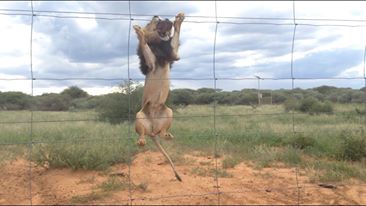
Clearance the lion roaring for his dinner.
Following an incredibly rewarding week-long urban homestay, the CGEE students were ready to attack the new week. On Monday the Environmental and Sustainability class had the great pleasure of visiting the N/a’an ku se Lodge and Wildlife Sanctuary, located just 42 km east of Windhoek. Upon our arrival the tour guides drove our group out to visit a San Bushmen family that periodically stays at the sanctuary to educate tourists about their traditional lifestyle. The San people took us around the land to showcase their traditional hunter-gatherer techniques, as well as the way they utilize plants for holistic healing purposes. It was a tremendous learning opportunity, but many members of our group felt conflicted about the implications of our experience as the San people were removed from their lands and are now considered the most marginalized community in Namibia, forcing them to commodify their culture to tourists. Shortly following the tour, our group was off to visit and learn about the Wildlife Sanctuary. Through the visitation of different animals such as lions, wild dogs, baboons, cheetahs and leopards, our class was able to get a much better idea as to how N/a’an ku sê has successfully been able to protect wildlife and their habitats. The sanctuary provides a haven and second chance for countless injured, orphaned, and abused animals. It’s the organization's goal to release every animal free so they can live a natural life in the wild, but that sadly isn’t always the case. We learned that the release or rehabilitation is not always possible due to the severity of an animal's injury or habituation to humans, all serving as a threat to their safety if they were to be released. One highlight of the trip was being able to witness Clarence, the male lion, soar into the air to snatch his dinner. It was extraordinary seeing him viciously mark his territory and establish his dominance.
Beautiful snapshot of one of the cheetahs

On Tuesday March 1st Mr. Phil Ya Nangoloh spoke in our History class, entitled “Race & Racism in Southern Africa and the U.S.”. Mr. Ya Nangoloh is a human rights activist and director and co-founder of NamRights. He described NamRights as a monitoring and advocacy human rights organization that can be compared to Human Rights Watch or Amnesty International, except that NamRights operates on a national, rather than international, scale. NamRights also gives paralegal services of which most cases are either people dismissed in the private sector or women seeking complaints against their male counterpart.

His task was to explain his understanding of discrimination and racism in Namibia and Southern Africa currently and historically. Mr. Ya Nangoloh claims that Namibia has historically been a victim of state racism, having undergone both German and South Africa occupation, the latter of which engulfed Namibia into apartheid. He spoke of how the Namibian constitution is extremely liberal and has very good human rights components, but that these laws are not effectively implemented in Namibia, if at all. The main point Mr. Ya Nangoloh made was that since the end of apartheid, and the liberation struggle, the way in which discrimination plays out has changed. During the liberation movement there was one common enemy to fight against, which was South Africa and the apartheid regime. Now, as this one enemy has technically been conquered, discrimination stems from wealth inequality, racism, and the scramble for scarce resources. Discrimination, now, he explained, comes from within societies or communities rather than from outside. He concluded on what I thought was a grounding note. He said that “racism is an innate and human nature, but there are good people doing things about it, like you and me”. We have been struggling with learning about all the awful disgraces of both the United States and Southern Africa, and it was nice to hear a “realistic” view on things, that there is discrimination but that there are people working to combat it. 

On Wednesday March 2, we had a very interesting speaker visit our Development class. Herbert Jauch, a German expat and political activist in Windhoek, has spent the last couple years studying income inequality in Namibia. The beginning of his presentation explained key points of Namibian history and eventually evolved to explain how income inequality is a product of old historical systems still prevalent today. After setting the foundation for today’s inequalities, Jauch continued to explain a study that was conducted in hopes of alleviating poverty in Namibia. This social experiment, set in a small village south of Windhoek, focused on people who earn so little that basic necessities, such as education and health care, are inaccessible. A solution to these problems was an idea called a Basic Income Grant. This monthly grant of N$100 (US$ 6.25) was given out to every person in the area regardless of income or age in order to help cover basic costs of school books, registration fees, small health needs, or other costs that would help families access services and improve their quality of life. One staggering statistic Jauch shared with us was that in this community 60% of kids dropped out of school because they were hungry, but after the BIG was implemented, 95% of kids completed school. He also shared various benefits such as increased visits to clinics, and malnutrition dropping by half within a year of this grant. Unfortunately leaders at the time did not appreciate the success rates as much as Jauch and his organization did, and plans to continue this idea nationwide are at a standstill.

The idea of a monthly income grant fit well with what we have been covering in our Development class, specifically ideas of poverty alleviation and cases of well-intentioned development projects that do more hurt than harm. Jauch’s presentation was an interesting example of a poverty alleviation strategy and I was intrigued by the both the positive outcome and some ramifications such as the conclusion that programs like this are hard to implement regionally because of family members who migrated to the area to benefit as well. Another point Jauch made was that social welfare programs are generally stigmatized and by providing every individual with an equal grant stigmas are avoided and people are empowered to live healthier lives. Many people in the United States dislike the terms socialism and social welfare, but this speaker highlighted how these ideas can be helpful to society and gave me a case study I can use to support new ideas of aid implementation that I can share with others. Overall, I was very impressed by our speaker; his comments added insight into what we have been studying and local poverty alleviation efforts to combat a nationwide problem.

On Friday March 4th, the Religion and Social Change class had a guest speaker visit named Reverend Gotthard Gurirab. Reverend Gurirab is a faculty member at the University of Namibia working with a focus in critical issues facing the church. His talk focused on African Traditional Religion and how it has been affected by colonialism. Specifically, he discussed the diminishing role of Ubuntuism in African culture. Ubuntu is an African word which refers to a universal concept where people value the good of the community above self-interest. Reverend Gurirab has seen that Ubuntuism is almost dead in cities and those people who live on the same street live as if they are in foreign countries. He went on to describe the relationships between people in the cities and it paralleled greatly with relationships between people in the United States. I found it extremely interesting to hear him describe in detail, American society and condemn it as ruining the Namibian people. Africa is constantly subjected to the effects of colonialism even to this day and it can be seen that western society has overwhelmed the traditional values of the Namibian people. Ubuntu has ideologies of sharing, compassion, peace, reconciliation, combating crime and violence, and poverty eradication. These ideologies have been cast away by the younger population for western ideologies of focusing on the individual. Reverend Gurirab called for a massive revitalization of African Traditional Religion in Namibia and throughout Africa. This will be an uphill battle, however, to remove the stains of imperialism that still exist within Africa and many Namibians do not have any desire to move away from the western ideologies that promise a path to prosperity.

Overall, we had a great week of learning through speakers and field trips. We hope you enjoyed following us along our journey!