Showing posts with label church. Show all posts

Tuesday, December 5, 2017

Living Sustainably

By Adelina Alcarez
We started out the week by coming back from our Swakopmund stay, a touristy German town, and ended our week in NaDEET, a camp-like area on the Namib Reserve at which there was no wifi and mounds of sand, all kinds of creepy crawlies, and oryxes for miles around us. Needless to say, NaDEET was my favorite excursion of the week.
In between, we attended a couple of class on Monday, Tuesday, and Wednesday. Personally, I went to a couple of churches for my internship at an LGBTI human rights organization. A colleague of mine, Mickey, and I have been working on constructing a list of churches that are tolerant to the LGBTI community and measuring their tolerance. We do this by interviewing a leader of the church (if possible) and giving them a survey about their relationship with the LGBTI community. Thus far, most of the various places of worship have been a little apprehensive, yet welcoming and willing to talk with us. On Wednesday, we went to two churches. Both gave us a perplexing look when we first introduced ourselves. However, they were still willing to direct us to someone to talk to. I think that our experiences with churches may suggest that Namibia is ready to talk about LGBTI issues and even support their human rights, if well educated about them. What better place to start this conversation then with the system at which many members have shamed people for being part of the LGBTI community in the 16 century and many continue to make being LGBTI taboo today.
Description of the dry toilet system.
On Thursday, we left for NaDEET. NaDEET is a place to learn about sustainable eating, pooping, wasting, and cleaning. There is a dry, no-flush toilet. When dried, a person’s total amount of yearly poop can be just enough to fill a bucket. On top of that, there are dung beetles decomposing the poop at the very bottom, at least 6 feet underground. Their electricity was also powered by solar panels and food made mostly from solar cookers. Solar cookers look like large metal disks used to communicate with alien life, but they actually concentrate the sun's ray on the pot. They also had solar cooker in box form. There was a cup or bucket of water for the sinks and showers because there was no faucet; albeit, the shower did have a bucket attached to a shower head. I was astonished at how well the showers worked like a regular shower and how much water I could save by lowering the water pressure a little bit and not using water when I didn’t need it (like while I was washing and not rinsing). This tied in with the 17 sustainable development goals.
Surprisingly, the goals did not stop on issues directly associated with environment, but also social and economic issues like gender equality and poverty. On Friday, we went on a Dune Walk (which was more like a hike for me) and talked about the biodiversity of the Namib Desert. We encountered interesting creepy-crawlies like the Dancing Lady Spider and various fast pace beetles and a couple of oryxes. Something we also focused on was how connected each species is to each other; everyone’s actions can create a domino effect. For example, one year, there was a huge increase in the moth population. It is unknown why, but our guide Elias suspected it was because a predator to the moths was in low population. This created in influx of moth cocoons all over the desert. The oryxes mistook the cocoons for food. A moth infestation killed a large portion of the oryxe population that year.
Solar cookers. Not to be confused with alien
communication devices.

Later that day and weekend, we continued to learn about and live a more sustainable lifestyle. We watched a documentary about the NamibRand Nature reserve and NaDEET’s place within it. The reserve all started with one rich man who bought a lot of cheap land in Namibia to preserve it. It was rough in the beginning, but now it’s not only a place of animal preservation; it’s a place for research, a dark sky reserve, tourism, and environmental and sustainability education. I am so blessed to have been able to visit and learn from such an amazing place. I hope to put the education I learned here into practice and not only use less water and push for renewable energy, but also to educate myself about the environmental issues in the area I live in. This experience has changed my perspective on what role I play on this earth: to help protect it and protect the people who live in it. What a great week.


Wednesday, September 20, 2017

Week 3: The On-going History of Slavery in South Africa

By Adelina Alcaraz  
Our week started with a powerful tour informing us of the history of slavery in the Cape. As we went on our tour, we were informed that the places are ancestral grounds belonging to the Coy and Sun tribe. Common amongst colonization stories, when the colonizers came to Cape Town, they did not distinguish people by the various and divergent tribes, but simply by the color of their skin. It was better for colonizers to not use the Coy and Sun as slaves from the beginning. However, when slavery did come to the Cape, it came with a great force. Among the imported slaves were tens of thousands of children.
Small slave memorial in Cape Town

Later, our tour guides pointed out the surprisingly small memorials of slavery in Cape Town which exhibits the problem of being ignorant of the past. For example, there was a memorial of black blocks small enough to sit on. These block had words like slavery, resist, and a list of names to symbolize the horrors of the slave trade and following oppression in Cape Town. Although artistic, the message of the blocks is unclear to those that aren't familiar with that history therefore, is not efficient in educating others.

One of the most troubling memorials is a block in the shape of a tree trunk to symbolize the trees used to auction off slaves. This horrifyingly inhumane practice is ironically meant to be remembered by placing a circular block, not even big enough to sit comfortably on, in the middle of two busy roads, where people pass it daily, not even getting a glance at it. From this, we learned that ignorance of the past can not only threaten the future but also hurt and disrespect descendants of the oppressed.

After the tour, we were guided to an emotional HIV exhibit. We not only saw the pictures and stories of HIV survivors around the world, but were also introduced to an HIV survivor who is also a transgender woman, cancer survivor, former drug addict and sex worker. Her story of surviving so much trial proves her strength and amazing capability. Her main message to us was to break down stereotype of those living with HIV. They are not only capable of living a normal life, but strong in facing not just the HIV disease, but the harsh stigma put on them by the society they live in. Her story was inspirational and empowering to not only those living with HIV, but those being unjustly punished by society for not fitting into the box each society places every person in.

Some of us ended the day with a Swami yoga instructor. Interestingly, he identifies no religion, but is knowledgeable of many so that he may offer guidance to those that wish to connect the spirituality of yoga with her or his religion. The spirituality of yoga is something that mainstream yoga in the U. S. rarely mentions. One of the things the yoga instructor emphasized was the idea of selfishness in today’s world. He argued that selfishness is the base to the world’s problems and that happiness should come from making others happy. Coming from a society where self-care and helping yourself before you can help others is a common thought, it was interesting and frankly hard for some of us to accept. As for myself, I’m still struggling on what this means for complex situations, like what this looks like across cultures. Although the yoga instructor insisted this being a simple teaching, I think in practice it’s much more complex.
Photo from the HIV exhibit.

 
At the District 6 museum, we learned the story of someone who experienced inhumane relocation. He explained to us what it was like being forced out of his home during apartheid.
 
On Wednesday, we went to church, to school, and then to the Sex Workers Education and Advocacy Task Force. At each place were taught about love for each other and helping one another though things like acceptance and support. One of the most striking things to challenge my perspective was being introduced to the term sex worker, a more respectful way to address prostitutes. It was the idea that sex work can be just like any other work: a choice done willingly by the worker that should be protected by law instead of being criminalized. Unfortunately, a majority of the media, public, and politicians do not distinguish the difference between sex workers, those that choose their occupation, and human trafficking survivors, those forced into sex slavery.
 
The rest of the week involved moving into Windhoek, Namibia, a place we’ll call home for the following three months. Here, we reunited and met with the rest of the staff, or more appropriately labelled the rest of our family.

Tuesday, April 26, 2016

Week Nine: Rural Homestay

by: Beatrice Misher, Dashawn Peterson, Molly Weilbacher

On Tuesday, March 22nd our group woke up at 5am, brushed the sleep from our eyes and tried to conquer our nervous energy, to depart for an eight-hour drive up north to Outapi, Namibia. As the hours went by, the temperature increased but so did our excitement. We finally got to meet each of our families and were welcomed with loving smiles and high energy, even though we were four hours late. CGEE students hopped in the beds of trucks as we departed into the sunset to see our families’ homesteads and what our life would be like for the next week.

We each found ourselves on homesteads, based off of the traditional Oshiwambo homestead structure. Each of our homesteads had a few man-made cement structures, but the rest of the homestead was set up in a maze of wooden fences leading to different huts that were each used for a distinct purpose: cooking, storing food, drinking tea, living and sleeping, and mahango pounding. Our families had common crops on our farms, including mahango—a grain used to make porridge, which is central to our families’ diet and can be found at all meals. Their farms also included watermelon, beans, and corn, and animals including cattle, donkeys, goats, chickens, dogs, and pigs. Our families all cooked meals over the fire. As the sun set, they would start preparing the food to put on the fire. Many of us experienced eating by torchlight, or guided by the light of the moon and stars, since there was no electricity. We would go to the bathroom in outhouses outside the homestead with a long drop toilet, and if we had to pee we would typically pee in the same area we washed. We would wash by dunking our hair in a basin and splashing water onto ourselves in a secluded area both blocked by the house and by a maze of sticks.  We would often be in bed by 10pm at the latest, due to exhaustion from the intense heat. 

After our first night with our families, we were picked up by the CGEE vans and all went to the Outapi War Museum—the museum was a converted bunker originally used by the South African Defense Force during their fight against the liberation struggle. Outapi has a rich history when studying the liberation of Namibia because it was where the bulk of the war for liberation took place. SWAPO (South West Africa People’s Organization) was the liberation party that fought against the South African Defense Forces against Apartheid in what was then South-West Africa, and has been the ruling party since 1989. PLAN (People’s Liberation Army of Namibia), the military arm of SWAPO had their military base in Angola, and Outapi being so close to the border of Angola meant that many civilians were caught in the crossfire between the South African Defense Force and PLAN. At the museum, we were guided by the director who joined SWAPO at the age of fourteen to help fight for Namibia’s liberation. We also got the chance to meet two women who were teachers during the war, who spoke to us about their duties and involvement with SWAPO and the equal gender breakdown within the SWAPO. It was very surreal to speak to people who helped Namibia gain independence, who reminded us how fresh this history still is—so fresh that many people are still dealing with PTSD from the war, and still have a hard time sharing this piece of loaded history with others. Many of our host families spoke of their involvement during the war, from hiding supplies in the fields for SWAPO members in exile, to getting tortured by the South African army. 

At the end of our week we all came together with our host families to celebrate and thank our families for their hospitality. They lent us traditional Oshiwambo dress for the occasion and we ate traditional food prepared by our host mothers. Both the students and the families expressed how grateful they were for this partnership and the chance to learn and connect with other cultures. The connections we made with each of our families allowed us to have varied experiences and reflections. In the paragraph below you will find a personal reflection from each of us about our homestay, as it is important to nuance the experience:

Bea: I stayed with Mame Naango and Tate Tobias, along with their children. My host family welcomed me into their way of life for the week, sharing their daily routines with me and family history. Something I struggled with over the course of my stay was the ethics of our homestay experiences. We as American students entered these welcoming homes ready to learn and broaden our perspectives, but what were we giving back in return?. Before both my urban and rural homestay this was something I consciously considered, and tried to carry out by sharing stories of my home and lived experience when they were gracious enough to share with me. However at times the inequality of the exchange became apparent such as the fact that we were sent to our homestays with boxes of food that the family would not normally keep in their house, or when I pulled out bug spray one night and realized it was a luxury to my homestay family, even though they are the ones living in a malaria-prone part of the world.

DayDay: Comfortability and access are things I take for granted, and was a big aspect of the rural homestay in my opinion. Living in an apartment building where water and electricity is included I took for granted that privilege. Going up north having to take a bucket shower with limited water and having very little electricity really pushed me out of my comfort zone but also made me reflect how spoiled I am to be living the way I do in America. I was able to experience the world through different lenses and realize that the way the American society believes life should be lived is not the only way to live.

Molly: My time at the homestead made me think about how we choose to qualify life. Watching my family take a break from 11am - 4pm, sitting under the tree together because it is too hot to do anything else made me anxious, as I was itching to do something. I realized that my discomfort came from the fact that I’m not used to just sitting and being with one another, as I come from an American mentality that is so focused on how much you do, how many people you see, how much you buy as a means of measuring how successful one’s day is. We view how much we produce and our outputs as a way of qualifying our daily lives, whereas in my homestead my family was content with sitting and letting the heat pass because there is a different emphasis on what the success of a daily routine means. I ended up loving sitting, eating watermelon, drinking cola, watching the sun move, and playing soccer when it got cool enough. It made me realize how important it is to constantly be checking our internal biases--even around something as abstract but real as the quality of life.

Wednesday, March 16, 2016

Week Six: Lions and Cheetahs and Learning - Oh My!

by: Olivia Cook, Lia Wellen, Richie Wehman III, Nathanael Juliot

We are settling into our routine at the Center for Global Education and Experience here in Windhoek, Namibia. Most of our classes involve either speakers or field trips which enhances our learning and understanding of Southern Africa and most specifically Namibia in terms of history, politics, development, religion, and environment. In this post we will tell you about some of these engaging class experiences! We felt weird taking pictures of the speakers, but we have some pictures of the Environment & Sustainability class field trip, which is more exciting anyways! Why is it more exciting? Keep on reading to see!
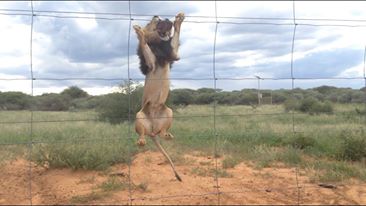
Clearance the lion roaring for his dinner.
Following an incredibly rewarding week-long urban homestay, the CGEE students were ready to attack the new week. On Monday the Environmental and Sustainability class had the great pleasure of visiting the N/a’an ku se Lodge and Wildlife Sanctuary, located just 42 km east of Windhoek. Upon our arrival the tour guides drove our group out to visit a San Bushmen family that periodically stays at the sanctuary to educate tourists about their traditional lifestyle. The San people took us around the land to showcase their traditional hunter-gatherer techniques, as well as the way they utilize plants for holistic healing purposes. It was a tremendous learning opportunity, but many members of our group felt conflicted about the implications of our experience as the San people were removed from their lands and are now considered the most marginalized community in Namibia, forcing them to commodify their culture to tourists. Shortly following the tour, our group was off to visit and learn about the Wildlife Sanctuary. Through the visitation of different animals such as lions, wild dogs, baboons, cheetahs and leopards, our class was able to get a much better idea as to how N/a’an ku sĂȘ has successfully been able to protect wildlife and their habitats. The sanctuary provides a haven and second chance for countless injured, orphaned, and abused animals. It’s the organization's goal to release every animal free so they can live a natural life in the wild, but that sadly isn’t always the case. We learned that the release or rehabilitation is not always possible due to the severity of an animal's injury or habituation to humans, all serving as a threat to their safety if they were to be released. One highlight of the trip was being able to witness Clarence, the male lion, soar into the air to snatch his dinner. It was extraordinary seeing him viciously mark his territory and establish his dominance.
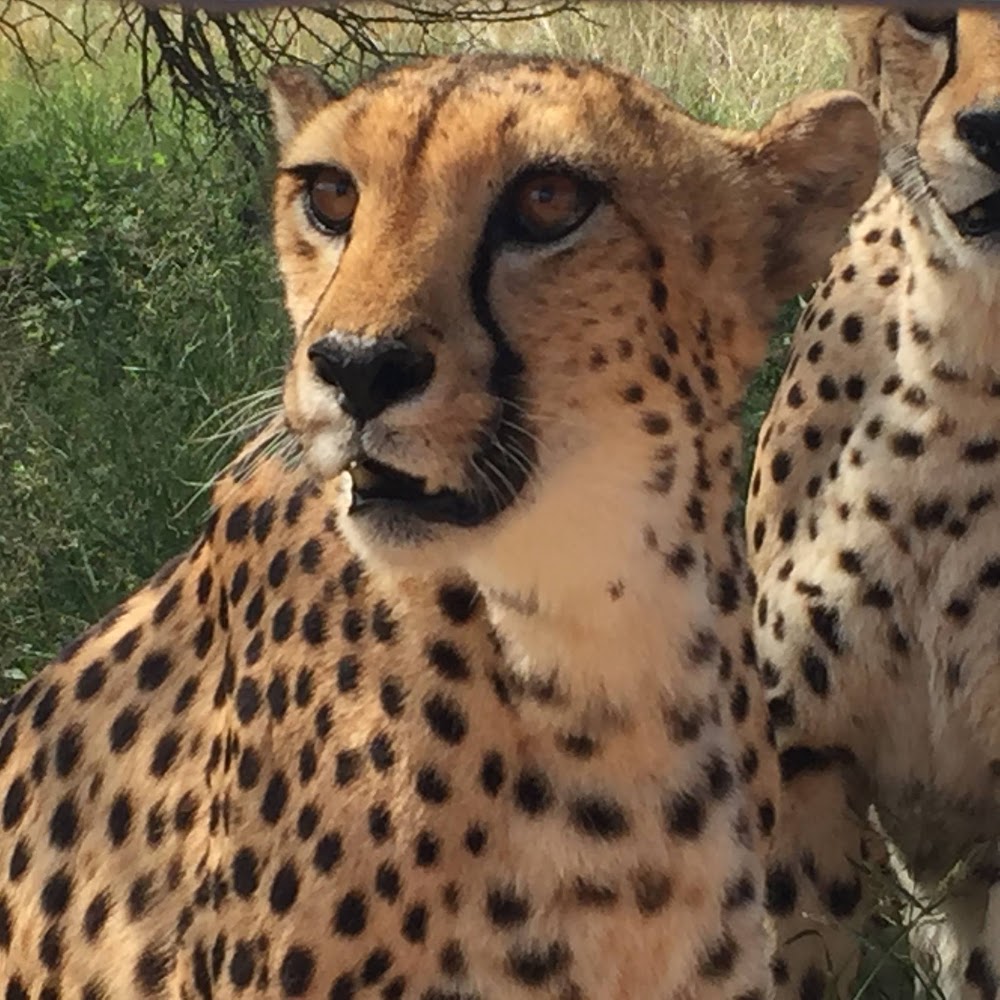
Beautiful snapshot of one of the cheetahs

On Tuesday March 1st Mr. Phil Ya Nangoloh spoke in our History class, entitled “Race & Racism in Southern Africa and the U.S.”. Mr. Ya Nangoloh is a human rights activist and director and co-founder of NamRights. He described NamRights as a monitoring and advocacy human rights organization that can be compared to Human Rights Watch or Amnesty International, except that NamRights operates on a national, rather than international, scale. NamRights also gives paralegal services of which most cases are either people dismissed in the private sector or women seeking complaints against their male counterpart.

His task was to explain his understanding of discrimination and racism in Namibia and Southern Africa currently and historically. Mr. Ya Nangoloh claims that Namibia has historically been a victim of state racism, having undergone both German and South Africa occupation, the latter of which engulfed Namibia into apartheid. He spoke of how the Namibian constitution is extremely liberal and has very good human rights components, but that these laws are not effectively implemented in Namibia, if at all. The main point Mr. Ya Nangoloh made was that since the end of apartheid, and the liberation struggle, the way in which discrimination plays out has changed. During the liberation movement there was one common enemy to fight against, which was South Africa and the apartheid regime. Now, as this one enemy has technically been conquered, discrimination stems from wealth inequality, racism, and the scramble for scarce resources. Discrimination, now, he explained, comes from within societies or communities rather than from outside. He concluded on what I thought was a grounding note. He said that “racism is an innate and human nature, but there are good people doing things about it, like you and me”. We have been struggling with learning about all the awful disgraces of both the United States and Southern Africa, and it was nice to hear a “realistic” view on things, that there is discrimination but that there are people working to combat it. 

On Wednesday March 2, we had a very interesting speaker visit our Development class. Herbert Jauch, a German expat and political activist in Windhoek, has spent the last couple years studying income inequality in Namibia. The beginning of his presentation explained key points of Namibian history and eventually evolved to explain how income inequality is a product of old historical systems still prevalent today. After setting the foundation for today’s inequalities, Jauch continued to explain a study that was conducted in hopes of alleviating poverty in Namibia. This social experiment, set in a small village south of Windhoek, focused on people who earn so little that basic necessities, such as education and health care, are inaccessible. A solution to these problems was an idea called a Basic Income Grant. This monthly grant of N$100 (US$ 6.25) was given out to every person in the area regardless of income or age in order to help cover basic costs of school books, registration fees, small health needs, or other costs that would help families access services and improve their quality of life. One staggering statistic Jauch shared with us was that in this community 60% of kids dropped out of school because they were hungry, but after the BIG was implemented, 95% of kids completed school. He also shared various benefits such as increased visits to clinics, and malnutrition dropping by half within a year of this grant. Unfortunately leaders at the time did not appreciate the success rates as much as Jauch and his organization did, and plans to continue this idea nationwide are at a standstill.

The idea of a monthly income grant fit well with what we have been covering in our Development class, specifically ideas of poverty alleviation and cases of well-intentioned development projects that do more hurt than harm. Jauch’s presentation was an interesting example of a poverty alleviation strategy and I was intrigued by the both the positive outcome and some ramifications such as the conclusion that programs like this are hard to implement regionally because of family members who migrated to the area to benefit as well. Another point Jauch made was that social welfare programs are generally stigmatized and by providing every individual with an equal grant stigmas are avoided and people are empowered to live healthier lives. Many people in the United States dislike the terms socialism and social welfare, but this speaker highlighted how these ideas can be helpful to society and gave me a case study I can use to support new ideas of aid implementation that I can share with others. Overall, I was very impressed by our speaker; his comments added insight into what we have been studying and local poverty alleviation efforts to combat a nationwide problem.

On Friday March 4th, the Religion and Social Change class had a guest speaker visit named Reverend Gotthard Gurirab. Reverend Gurirab is a faculty member at the University of Namibia working with a focus in critical issues facing the church. His talk focused on African Traditional Religion and how it has been affected by colonialism. Specifically, he discussed the diminishing role of Ubuntuism in African culture. Ubuntu is an African word which refers to a universal concept where people value the good of the community above self-interest. Reverend Gurirab has seen that Ubuntuism is almost dead in cities and those people who live on the same street live as if they are in foreign countries. He went on to describe the relationships between people in the cities and it paralleled greatly with relationships between people in the United States. I found it extremely interesting to hear him describe in detail, American society and condemn it as ruining the Namibian people. Africa is constantly subjected to the effects of colonialism even to this day and it can be seen that western society has overwhelmed the traditional values of the Namibian people. Ubuntu has ideologies of sharing, compassion, peace, reconciliation, combating crime and violence, and poverty eradication. These ideologies have been cast away by the younger population for western ideologies of focusing on the individual. Reverend Gurirab called for a massive revitalization of African Traditional Religion in Namibia and throughout Africa. This will be an uphill battle, however, to remove the stains of imperialism that still exist within Africa and many Namibians do not have any desire to move away from the western ideologies that promise a path to prosperity.

Overall, we had a great week of learning through speakers and field trips. We hope you enjoyed following us along our journey!

Monday, February 15, 2016

Week Three: Disparity in the Mother City

by: Luke Beasley and Patrick Toomey
Sunday, our group had achieved a large degree of familiarity with the area in which we were staying in Cape Town. Our street was quiet, with several quaint cafes and restaurants across from the guest house, while only being a block away from one of the busiest sections of the city center. Coming back from our free day, which many of us spent at Camps Bay Beach (which sits right at the base of Table Mountain), we were excited to explore a very different part of Cape Town.
We spent our Sunday morning at Way of Life Church in Khayelitsha, the second largest township in South Africa, and home to millions of people. It is difficult, if not impossible, to gauge the exact number of residents in Khayelitsha because such a large percentage of them live in “informal settlements,” made up of tin shacks with no access to running water. At Way of Life Church, we met Pastor Xola Skosana, and observed his congregations service. It was definitely an unorthodox type of “religious” ceremony, and was far more of a safe place for black South Africans to gather together and discuss matters of white privilege and their experiences with oppression. Pastor Xola Skosana made a point of asking us our names and majors, and immediately after we finished sharing, he informed us that he “didn’t care” and did not try to remember our information; as he explained, this was an exercise in helping us as privileged Americans, many of us also being white, in understanding the experience of being a “forgotten” member of South African society (i.e. a black South African). The Pastor also asked us, “How are you able to sleep at night?,” referring to the fact that we were visiting South Africa to learn from its past, but in order to do so we required that victims of Apartheid relive and retell their traumatizing experiences. 
The meeting was definitely shocking, and it took many of us several days to process. Although some people were angry and upset, and certainly much of the group was at least confused, in the end it was a vital moment for our group. It was jarring, and it made us question our role in the world, and in Africa, as white people and as Americans. For many of us, it was the first time when we were required to feel nameless and forgettable, not to mention unwelcome, but it was undoubtedly a learning experience.
The next morning we spent at the District Six Museum learning about the area through the eyes of Noor Ebrahim. According to Noor, District Six is an area of Cape Town where around 60,000 black South African people were forcibly removed and placed into the area of the Cape Flats during Apartheid. Noor was living with his family in the district at this time and was one of the many that who through this difficult and unjust experience. Noor has told his story to many prominent figures including Nelson Mandela. After learning so much about Apartheid the previous week in Johannesburg, it was valuable to hear from the perspective of an individual that was profoundly impacted. It once again made everyone try to comprehend and understand an event that is so difficult for any of us to relate to. 
            Wednesday was our last full day in Cape Town and we were free to do whatever we wanted. After a week of thoughtful and challenging conversations with speakers and each other, it was a much needed break. Everyone had their own day full of adventures around the city, including seeing penguins, relaxing on the beach, going to a wine festival, paragliding, and surfing. We were exposed to the incredibly beautiful touristy side of Cape Town that has captivated people from all over the world. However, after the week’s experiences we know that there is much more to Cape Town than catches the eye of most. We saw the incredibly complex and difficult problems that the local people face every day–poverty, privilege, racism, discrimination, and HIV/AIDS that affect everyone in some way. Amidst all of these problems are many individuals and organizations that are working tirelessly to make a difference and fight against the injustice. 
After our challenging, thought-provoking, and incredible two weeks in South Africa, everyone was anxious to finally arrive in Windhoek and get acquainted with our new home. In our first few days we took walking and driving tours trying to get sense of our city. Now that we are becoming settled into our new home, there is so much to look forward to in the next three months. With classes and internships starting soon, we reflect on the incredible amount we have already learned while preparing for the opportunities and experiences that are soon to come.