Showing posts with label student. Show all posts

Monday, November 6, 2017

Not Windhoek, Inhoek

By Maddie Dilday
This week we took on the rural homestay at 2 different farms outside of Khorixas. The farm that I was staying on is known as Inhoek Pos. I had 2 host sisters who lived with us, one being 6 and one being 5. They were 2 amazing highlights of the stay! Whenever I was home, the girls were with me. We would play games, and run around the farm playing with the other children on the farm. The girls were my guide for the week! One of our favorite games on the farm was called Owella. We learned Owella on the very first night at the farm. Here we also learned how Damara chiefs used to use the game in order to solve conflict. The first game ended in a draw, but by the end of the week, Adelina had become a pro! I on the other hand am still in training.
The girls would also often visit “the dam”. This was where they got their water, swam, and provided water for their cattle. The dam also provided water for the wild animals of the area, specifically the elephants that would often visit. The dam was peaceful at times, especially when we would just be collecting water for the day. But the dam could also be lively! For example when the kids went swimming! They would climb into the dam and splash around, cooling off in the midday heat.
This is one of the open areas located within
Cornelius Goreseb school grounds.
When I wasn’t running around the farm with my host sisters, the students would be exploring and experiencing Khorixas. Of these experiences, the best was getting to speak with the students of Cornelius Goreseb High School. Having the chance to speak to students slightly closer to our own age was something different and interesting that many of us had not had the opportunity to do yet. The students were exactly like a high school student in the United States would be! They loved to hang out with their friends, liked missing class to talk, and were just beginning to realize how exciting their future can be. Many of our students were physical science focused students (In Namibia, in 10th grade you pick either hard sciences or social/historical courses to focus on and then continue on those specific courses until graduation and often times after.), which I found very encouraging as a current university science major. Aside from talking about classes, the students really just wanted to compare everyday life between here and the United States, which I think they found to be surprisingly similar. Overall, the exchange allowed us to have a new perspective when viewing Namibia, and the world around us. While personally, it made me think on the United States education system, and the differences, both good and bad. 
A picture of my host family during the end of the week party we had.
We all dressed up and had a great time.
My favorite part of the week was every night when the entire farm would come together. During these moments, the kids would calm down, and the adults would all come together as well. We would talk about the Damara culture, sing songs, tell scary stories, and share constellations in the beautifully clear night sky. These moments are the ones that will stay with me through the rest of my life, because these are the moments when we all actually felt like a family. Laughing, sharing, and having a great time together.

Tuesday, August 23, 2016

Week Two: The Unseen Colors of the Rainbow Nation

by Imani Briscoe & Kitty McGirr

I remember waiting for my flight not two weeks ago genuinely envisioning what this “rainbow nation” was going to look like once I landed in Johannesburg. Now as we conclude our time here in South Africa, I am beginning to appreciate that what lays beneath this widely propagated ideal is much more complex, nuanced and problematic than the romanticized image I and many others with a similarly elementary understanding of post-apartheid South Africa would imagine this so-called rainbow nation to be. 

The varied nature of our activities and conversations on the program so far is indicative of the diversity of views and circumstances among the people of South Africa. However, while at face value this diversity supports the dominant narrative of South Africa as a rainbow nation, upon closer examination one begins to recognize that formerly institutionally separate racial groups are not suddenly coexisting harmoniously with one another now that apartheid has ended. In fact, the majority of what I have seen on the program so far suggests almost the opposite. Rather than achieving real unity and equity in the post-apartheid era, the many colorful identities comprising this so-called rainbow nation seem in some ways to be just as far removed from and unequal to each other as what was previously instituted under the apartheid system.  

In addition, it is very intriguing that, even with the acknowledged importance of the history of South Africa’s “Rainbow Nation”, discussions surrounding the indigenous people and colonization of what is now known as Cape Town rarely occur. Most of what we find in the American education history books regarding the changes Cape Town has gone through seems to focus on the racial issues of blacks and whites.  There is little to no conversation about the people who originally lived, loved and lost before the social constructs of race dominated the historical narratives; narratives such that influenced the process of colonization , which has very much impacted current day Cape Town. This past week we took a walking tour of the city of Cape Town with Lucy and Kadijah from Transcending History Tours, and learned a plethora of information about the way of life before and during colonial settlement and were given an opportunity to discover the untold story of Cape Town’s first people, the khoi-san.

Our tour took us through many notable areas including the first colonial settlement in the area, the Castle of Good Hope, Cape Town City Centre which holds some historic markers pertaining to the slave trade prior to the 1834 emancipation, and the well-known Iziko Slave Lodge which housed slaves from all over the world during the slave trade.

In every building we entered, every short filmed viewed, and every monument we paid respect to, I thought of Cape Town’s historical parallels to what was happening in the United States of America during the same time. It is illuminating to learn that on the other side of the world the same methods of racial division through systematic control and oppression were being implemented. It’s interesting to consider how both regions were shaped by the countless issues that colonization and devastation left behind. As a black American and proponent of black-consciousness, with no known blood relative connections to the Africa as a whole, I, Imani, have heard about the same kind of oppression and slavery time and time again on American soil and therefore felt like I shared a common history with those people who went through the same struggles as my ancestors did, just in another place of the world.

After leaving our homestay families in Soweto, we travelled to the University of the Free State in Bloemfontein, a city traditionally associated with and populated by Afrikaner people. Upon arrival we met with the deputy director of the Institute for Reconciliation and Social Justice, JC van der Merwe for a discussion on the history of the campus as well as the issues facing the institution at present. One detail that I found particularly striking was the fact that no formal pressure was placed on UFS or any higher education institution in South Africa to desegregate their campuses after 1994. In fact, according to van de Merwe, the residences of UFS were still racially segregated as early as 2007. I was moved by this information for two reasons. Firstly, I was immediately reminded of the parallels between South Africa’s failure to desegregate its educational system and the language of Brown v. Board of Education in the US whereby the Supreme Court only required schools to desegregate “with all deliberate speed”. Secondly, I was struck by how incongruous the politicized idea of a rainbow nation was to the reality on the ground in South Africa. Thirteen years after the ANC led the liberation struggle to overturn apartheid, white students at this university were still resisting administration mandates to integrate. 

The last activity for our day at UFS involved taking a tour around campus with two students we had met previously at a group discussion about our respective experiences as university students. One of our tour guides was keen to relay to me her experience being part of the first racially mixed female residence on the campus, which she described as a genuine “sisterhood”. However, the visual landscape of the campus was again at odds with the widely proliferated image of the rainbow nation, the narrative of unified racial integration and even the story my tour guide relayed to me about her mixed residence minutes before the tour began. Walking around the campus I did not see one mixed race friendship nor did I notice any white students present at a growing gathering of protestors demonstrating for higher wages for black workers on campus. Confused at what ostensibly looked like a state of enduring racial separation in the university community, I asked our guide if it was at all unusual that we hadn’t seen any interracial friend groups on our tour. Her response was a disheartening one: “No, it’s not unusual. People still don’t really mix”. These words, for me, were symbolic of the countless discrepancies I have witnessed in these two short weeks here in South Africa with regard to the romanticized ideal of a rainbow nation and the enduring reality of chronic racial inequality in the post-apartheid era.


Wednesday, March 16, 2016

Week Six: Lions and Cheetahs and Learning - Oh My!

by: Olivia Cook, Lia Wellen, Richie Wehman III, Nathanael Juliot

We are settling into our routine at the Center for Global Education and Experience here in Windhoek, Namibia. Most of our classes involve either speakers or field trips which enhances our learning and understanding of Southern Africa and most specifically Namibia in terms of history, politics, development, religion, and environment. In this post we will tell you about some of these engaging class experiences! We felt weird taking pictures of the speakers, but we have some pictures of the Environment & Sustainability class field trip, which is more exciting anyways! Why is it more exciting? Keep on reading to see!
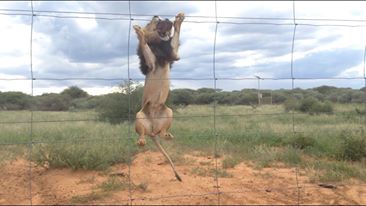
Clearance the lion roaring for his dinner.
Following an incredibly rewarding week-long urban homestay, the CGEE students were ready to attack the new week. On Monday the Environmental and Sustainability class had the great pleasure of visiting the N/a’an ku se Lodge and Wildlife Sanctuary, located just 42 km east of Windhoek. Upon our arrival the tour guides drove our group out to visit a San Bushmen family that periodically stays at the sanctuary to educate tourists about their traditional lifestyle. The San people took us around the land to showcase their traditional hunter-gatherer techniques, as well as the way they utilize plants for holistic healing purposes. It was a tremendous learning opportunity, but many members of our group felt conflicted about the implications of our experience as the San people were removed from their lands and are now considered the most marginalized community in Namibia, forcing them to commodify their culture to tourists. Shortly following the tour, our group was off to visit and learn about the Wildlife Sanctuary. Through the visitation of different animals such as lions, wild dogs, baboons, cheetahs and leopards, our class was able to get a much better idea as to how N/a’an ku sĂȘ has successfully been able to protect wildlife and their habitats. The sanctuary provides a haven and second chance for countless injured, orphaned, and abused animals. It’s the organization's goal to release every animal free so they can live a natural life in the wild, but that sadly isn’t always the case. We learned that the release or rehabilitation is not always possible due to the severity of an animal's injury or habituation to humans, all serving as a threat to their safety if they were to be released. One highlight of the trip was being able to witness Clarence, the male lion, soar into the air to snatch his dinner. It was extraordinary seeing him viciously mark his territory and establish his dominance.
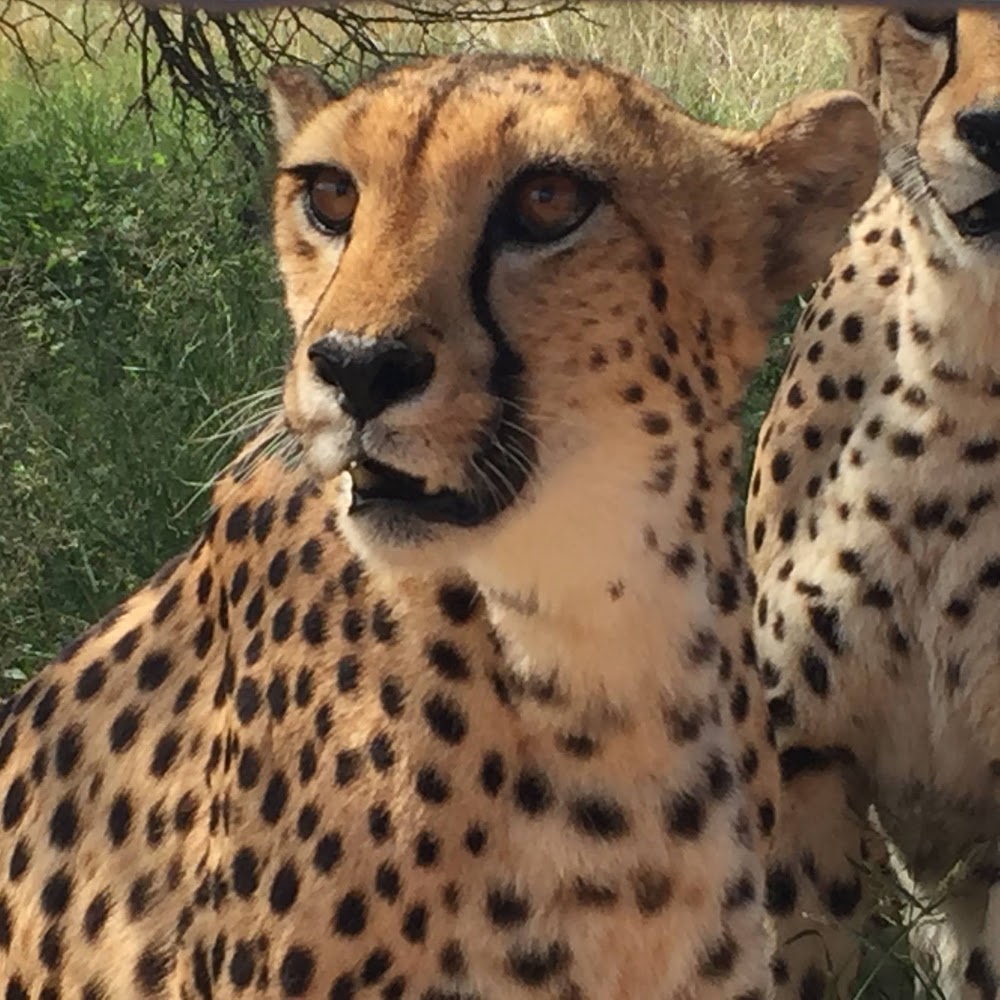
Beautiful snapshot of one of the cheetahs

On Tuesday March 1st Mr. Phil Ya Nangoloh spoke in our History class, entitled “Race & Racism in Southern Africa and the U.S.”. Mr. Ya Nangoloh is a human rights activist and director and co-founder of NamRights. He described NamRights as a monitoring and advocacy human rights organization that can be compared to Human Rights Watch or Amnesty International, except that NamRights operates on a national, rather than international, scale. NamRights also gives paralegal services of which most cases are either people dismissed in the private sector or women seeking complaints against their male counterpart.

His task was to explain his understanding of discrimination and racism in Namibia and Southern Africa currently and historically. Mr. Ya Nangoloh claims that Namibia has historically been a victim of state racism, having undergone both German and South Africa occupation, the latter of which engulfed Namibia into apartheid. He spoke of how the Namibian constitution is extremely liberal and has very good human rights components, but that these laws are not effectively implemented in Namibia, if at all. The main point Mr. Ya Nangoloh made was that since the end of apartheid, and the liberation struggle, the way in which discrimination plays out has changed. During the liberation movement there was one common enemy to fight against, which was South Africa and the apartheid regime. Now, as this one enemy has technically been conquered, discrimination stems from wealth inequality, racism, and the scramble for scarce resources. Discrimination, now, he explained, comes from within societies or communities rather than from outside. He concluded on what I thought was a grounding note. He said that “racism is an innate and human nature, but there are good people doing things about it, like you and me”. We have been struggling with learning about all the awful disgraces of both the United States and Southern Africa, and it was nice to hear a “realistic” view on things, that there is discrimination but that there are people working to combat it. 

On Wednesday March 2, we had a very interesting speaker visit our Development class. Herbert Jauch, a German expat and political activist in Windhoek, has spent the last couple years studying income inequality in Namibia. The beginning of his presentation explained key points of Namibian history and eventually evolved to explain how income inequality is a product of old historical systems still prevalent today. After setting the foundation for today’s inequalities, Jauch continued to explain a study that was conducted in hopes of alleviating poverty in Namibia. This social experiment, set in a small village south of Windhoek, focused on people who earn so little that basic necessities, such as education and health care, are inaccessible. A solution to these problems was an idea called a Basic Income Grant. This monthly grant of N$100 (US$ 6.25) was given out to every person in the area regardless of income or age in order to help cover basic costs of school books, registration fees, small health needs, or other costs that would help families access services and improve their quality of life. One staggering statistic Jauch shared with us was that in this community 60% of kids dropped out of school because they were hungry, but after the BIG was implemented, 95% of kids completed school. He also shared various benefits such as increased visits to clinics, and malnutrition dropping by half within a year of this grant. Unfortunately leaders at the time did not appreciate the success rates as much as Jauch and his organization did, and plans to continue this idea nationwide are at a standstill.

The idea of a monthly income grant fit well with what we have been covering in our Development class, specifically ideas of poverty alleviation and cases of well-intentioned development projects that do more hurt than harm. Jauch’s presentation was an interesting example of a poverty alleviation strategy and I was intrigued by the both the positive outcome and some ramifications such as the conclusion that programs like this are hard to implement regionally because of family members who migrated to the area to benefit as well. Another point Jauch made was that social welfare programs are generally stigmatized and by providing every individual with an equal grant stigmas are avoided and people are empowered to live healthier lives. Many people in the United States dislike the terms socialism and social welfare, but this speaker highlighted how these ideas can be helpful to society and gave me a case study I can use to support new ideas of aid implementation that I can share with others. Overall, I was very impressed by our speaker; his comments added insight into what we have been studying and local poverty alleviation efforts to combat a nationwide problem.

On Friday March 4th, the Religion and Social Change class had a guest speaker visit named Reverend Gotthard Gurirab. Reverend Gurirab is a faculty member at the University of Namibia working with a focus in critical issues facing the church. His talk focused on African Traditional Religion and how it has been affected by colonialism. Specifically, he discussed the diminishing role of Ubuntuism in African culture. Ubuntu is an African word which refers to a universal concept where people value the good of the community above self-interest. Reverend Gurirab has seen that Ubuntuism is almost dead in cities and those people who live on the same street live as if they are in foreign countries. He went on to describe the relationships between people in the cities and it paralleled greatly with relationships between people in the United States. I found it extremely interesting to hear him describe in detail, American society and condemn it as ruining the Namibian people. Africa is constantly subjected to the effects of colonialism even to this day and it can be seen that western society has overwhelmed the traditional values of the Namibian people. Ubuntu has ideologies of sharing, compassion, peace, reconciliation, combating crime and violence, and poverty eradication. These ideologies have been cast away by the younger population for western ideologies of focusing on the individual. Reverend Gurirab called for a massive revitalization of African Traditional Religion in Namibia and throughout Africa. This will be an uphill battle, however, to remove the stains of imperialism that still exist within Africa and many Namibians do not have any desire to move away from the western ideologies that promise a path to prosperity.

Overall, we had a great week of learning through speakers and field trips. We hope you enjoyed following us along our journey!

Wednesday, March 9, 2016

Week Five: Urban Homestays

By: Gabbi Mpagi, Patrick Toomey & Monique Lillis

This past week CGEE students completed their second homestay, which took place in the city of Windhoek. During the homestays in Soweto two students stayed with one family, but this time around each student stayed with their own family. The goal of these homestays are to help students meet individuals from the city, see how a family in the area leads their lives, and then compare stories of their differing experiences when they return to the CGEE house. Below are the experiences that three of the students had this week.

Gabbi’s host sister Edita using a
mortar and pestle to mash onions.
Gabbi: My urban homestay in Katutura exceeded my expectations and left me feeling like I finally belonged in Namibia. I was placed in the household of Henry and Leah Olu-King. The Olu-King household also consists of their daughters Rebecca, Edita, and Aleah as well as their son Emanuel. The Olu-Kings primarily enjoy spending time together as a family; an important way in which time is spent together in their home is through food, specifically the preparation of traditional meals. I had the honor of witnessing a traditional meal of sweet potato leaves being prepared on a Saturday afternoon. Sweet potato leaves are a meal native to Sierra Leone, the birthplace of Mr. Olu-King and temporary home during the apartheid era of Mrs. Olu-King. Ms. Olu-King had been sponsored by the United Nations as a young girl to go into exile as a means of escaping the war that took place in North between SWAPO and South African soldiers. While in Sierra Leone, she lived with a host family who cared for her as if she were their own daughter. We had previously learned in our history class of the liberation movement conducted by SWAPO beginning in the 1960’s and the amount of war rural areas faced during the struggle for freedom. Desperate for the chance at survival, Namibians fled from their homelands to seek safety in countries such as Botswana, Angola, and Zimbabwe.  

Gabbi and her host family the Olu-Kings outside
their home in Katutura
In the corner of their compound lies a garden in which sweet potatoes grow underneath the soil, while their many leaves sprout above the surface. Rebecca and Edita were responsible for cutting the leaves. Ms. Olu-King then washed the leaves, finely chopped them, and added the remains to a large pot of beef stew. Edita mashed onions together using a wooden mortar and pestle, eventually adding the ingredient to the pot. I admired how preparing the traditional meal not only made for a delicious dinner, but brought the entire family together. This left me with a lasting impression of the importance of family in Namibia and how simple activities such as cooking are ways in which close bonds within the home can be solidified. 

Patrick: Within the first ten minutes of my stay with the Shikeva family in Katutura I felt like I was home. Mr. Shikeva referred to me as his ‘son,’ and his son Matthew referred to me as his ‘brother.’ It was a refreshing and comforting experience, because I was feeling a bit homesick and hearing those words, even from people I had only just met, seemed truly genuine. Throughout my stay I felt like a part of the family, not just a guest: perhaps it was the fact that my host parents woke me up almost every morning to say goodbye and wish me a happy day, or that I played a role in saying grace before dinner. Either way, I felt extremely welcomed.

I learned quite a bit from Oskar and his wife’s experiences during apartheid, as well as the lasting effects of the apartheid regime on the residents of Katutura. The most visible of these was the letter and number system still present on his home’s front door. Although partially painted over with white paint, it was not difficult to make out the blue letter and number that were used during the apartheid-era to indicate the tribal group of the house’s resident. It was a reminder that apartheid was not that long ago, and that people who are my own parents’ age lived and experienced the brutality of the racist regime. Although the pain of apartheid can still be felt in Namibia, the resilience and faith of Katutura’s residents was inspiring to witness first hand. Perhaps this was best exemplified at the Sunday church service that I attended with the Shikeva family. The amazing show of faith that I saw was a testament to the strength of Namibia’s people and their enduring commitment to building a vibrant new nation.

Monique: In my opinion this homestay was the best part of my study abroad experience thus far. I stayed with a twenty-nine year old woman named Ndeshi, who lives in Katutura and works for the ministry of lands. Ndeshi is part of the Oshiwambo tribe; she grew up in the Northern part of Namibia, moved to central Namibia when she was a child, and moved to Windhoek for school as well as work. 

Monique and her host mom Ndeshi in traditional Oshiwambo dress
During my time with Ndeshi we spoke about many different things including the work she does for the ministry of lands, her experience as an unmarried woman in Namibia, and aspects of the Oshiwambo culture. In regards to the ministry of lands, I learned that this facet of the government buys up land from primarily white farmers who are selling their land, and gives the land to primarily black Namibians who have applied to receive the land in order to sustain themselves economically. This process of buying and giving out land is one way the government is trying to create a more equal society now that apartheid is over. White Namibians are still the most prominent farmers, and the hope of the government is that this redistribution of land and training of new farmers will allow black Namibians to earn a steady income off of land that was taken away from the black and colored communities during apartheid.

These home-stays helped us as students understand the individual experiences Namibians had during apartheid. Living in Katutura and talking to people in Namibia has also helped us understand how the country has changed since liberation and the end of apartheid as well as the ways the country could still improve. Overall students had very educational experiences that helped them understand Namibia and the people who live here from a different perspective.

Monday, February 15, 2016

Week Three: Disparity in the Mother City

by: Luke Beasley and Patrick Toomey
Sunday, our group had achieved a large degree of familiarity with the area in which we were staying in Cape Town. Our street was quiet, with several quaint cafes and restaurants across from the guest house, while only being a block away from one of the busiest sections of the city center. Coming back from our free day, which many of us spent at Camps Bay Beach (which sits right at the base of Table Mountain), we were excited to explore a very different part of Cape Town.
We spent our Sunday morning at Way of Life Church in Khayelitsha, the second largest township in South Africa, and home to millions of people. It is difficult, if not impossible, to gauge the exact number of residents in Khayelitsha because such a large percentage of them live in “informal settlements,” made up of tin shacks with no access to running water. At Way of Life Church, we met Pastor Xola Skosana, and observed his congregations service. It was definitely an unorthodox type of “religious” ceremony, and was far more of a safe place for black South Africans to gather together and discuss matters of white privilege and their experiences with oppression. Pastor Xola Skosana made a point of asking us our names and majors, and immediately after we finished sharing, he informed us that he “didn’t care” and did not try to remember our information; as he explained, this was an exercise in helping us as privileged Americans, many of us also being white, in understanding the experience of being a “forgotten” member of South African society (i.e. a black South African). The Pastor also asked us, “How are you able to sleep at night?,” referring to the fact that we were visiting South Africa to learn from its past, but in order to do so we required that victims of Apartheid relive and retell their traumatizing experiences. 
The meeting was definitely shocking, and it took many of us several days to process. Although some people were angry and upset, and certainly much of the group was at least confused, in the end it was a vital moment for our group. It was jarring, and it made us question our role in the world, and in Africa, as white people and as Americans. For many of us, it was the first time when we were required to feel nameless and forgettable, not to mention unwelcome, but it was undoubtedly a learning experience.
The next morning we spent at the District Six Museum learning about the area through the eyes of Noor Ebrahim. According to Noor, District Six is an area of Cape Town where around 60,000 black South African people were forcibly removed and placed into the area of the Cape Flats during Apartheid. Noor was living with his family in the district at this time and was one of the many that who through this difficult and unjust experience. Noor has told his story to many prominent figures including Nelson Mandela. After learning so much about Apartheid the previous week in Johannesburg, it was valuable to hear from the perspective of an individual that was profoundly impacted. It once again made everyone try to comprehend and understand an event that is so difficult for any of us to relate to. 
            Wednesday was our last full day in Cape Town and we were free to do whatever we wanted. After a week of thoughtful and challenging conversations with speakers and each other, it was a much needed break. Everyone had their own day full of adventures around the city, including seeing penguins, relaxing on the beach, going to a wine festival, paragliding, and surfing. We were exposed to the incredibly beautiful touristy side of Cape Town that has captivated people from all over the world. However, after the week’s experiences we know that there is much more to Cape Town than catches the eye of most. We saw the incredibly complex and difficult problems that the local people face every day–poverty, privilege, racism, discrimination, and HIV/AIDS that affect everyone in some way. Amidst all of these problems are many individuals and organizations that are working tirelessly to make a difference and fight against the injustice. 
After our challenging, thought-provoking, and incredible two weeks in South Africa, everyone was anxious to finally arrive in Windhoek and get acquainted with our new home. In our first few days we took walking and driving tours trying to get sense of our city. Now that we are becoming settled into our new home, there is so much to look forward to in the next three months. With classes and internships starting soon, we reflect on the incredible amount we have already learned while preparing for the opportunities and experiences that are soon to come.  

Sunday, February 14, 2016

Week Two: Living History

by Amanda Siskind

The thing about history is that there’s not much action needed. All the choices and plans have already been made, the important people highlighted, and the outcomes (for the most part) determined. The hard part of history comes from choosing to study it, and to study it properly. To completely immerse yourself into the stories that people tell, both the good and the bad. To hold that history in your memory as a reminder to learn from the mistakes of the past.

Chatting with Molefi as he takes us for a walk around Freedom
Park, a monument to memorialize those who have struggled for
liberation. His stories combine his personal history with facts
and information about larger movements.
This is something I have been thinking about, as we near the end of our time in Johannesburg and Soweto. Since we've been in South Africa, most of what we have been doing has been listening to people’s stories. I've quickly learned that stories are simultaneously an incredible and terrible way to study history. It’s incredible because only though such personalized accounts can we do our best to understand exactly what happened, how people felt, and how they reacted. We are incredibly lucky to be able to speak with Molefi, Moeketsi, our host families, and others and to be able to ask them questions and to have a dialogue. But it’s at the same time terrible because the other side of that luck is the knowledge that this history is recent and the scars are still fresh. These stories of pain and injustice aren't numbed by the pages of a textbook or the film of a documentary. But any discomfort that we feel has the much larger purpose of making sure that we remember these moments, and that we remember our feelings of shock and sympathy when we come across injustice in our lives.

After hearing all of these stories from the past week, it’s at first a little startling when we finally go to the Apartheid Museum at the end of our time in Johannesburg. Before I go in, I wonder if it’s not a bit backwards – shouldn't we have learned all of this before hearing personal stories? But as I wander through the Museum, I begin to feel that this is the right order to do things after all. The amount of history encapsulated in the museum is staggering, and had I been told at the beginning of this trip to take three hours to weave my way through the exhibits, I don’t think I would have been able to give the museum the attention and focus it deserves.

But now, with my head filled by a chorus of narratives, I find myself much more invested in reading every placard and watching every video. Every time my attention starts to wane, I notice a familiar detail and remember the sound of someone’s voice saying I remember when… or We used to… or This is what we did. It’s those memories that keep me interested and encourage me to keep learning. In particular, This is what we did inspires me the most to learn about the actions that people took to turn against the injustices around them.

Because the thing about history is that there’s not much action needed and while the hardest part of history is choosing to study it, the hardest part of being history is choosing how to live through it. It is easy for us to look back on the past and on its people and think How brave they were, to make those sacrifices. It is much harder to recognize that our actions at this moment are creating the history that someday future generations will hear passed down in stories or view in crafted museum exhibits. It is even harder to choose similar bravery and sacrifices for ourselves.

But just because it’s harder doesn't mean it isn't impossible. We have learned the history of the student uprisings of 1976 in Soweto, and we too are students who are interested in turning against the injustice of our world. We have already started to work towards this goal, both as individuals working on projects back at our respective colleges, and as a group having discussions at the dinner table and in our vans about the kinds of oppression we've seen and how to combat it.

This kind of work is being duplicated by students everywhere. We've seen in the United States a number of student activists working with Black Lives Matter, joining the People’s Climate March, and working to promote LGBT and women’s rights. In South Africa, we've learned about the #FeesMustFall campaign, where students are fighting to remove financial barriers to education.

After we leave Johannesburg, we drive to Bloemfontein and we spend a day visiting the University of the Free State and meeting the students and staff of the Institute for Reconciliation and Social Justice. The Institute was founded as a means to cultivate humanity to counter violence and disrespect, and the students are actively researching the kinds of changes that could be implemented and their impacts while also establishing institutional transformations to create the society they envision.

There are a lot of different ways to interact with history. Visitors
have written comments around a photography exhibit in the Regina
Mundi Church about the liberation struggle, encouraging people to
continue to fight against injustice today.
We spend the afternoon seated in a circle as Americans and as South Africans, unified as students invested in choosing the best way to live for our history. We talk about racism and how even though it may look slightly different where we come from, the impact, the frustration and the pain are still the same. We talk about the stereotypes that we hold of each other, and of the damage that those ideas create in inhibiting us from connecting with each other. We talk about the world that we want to see, and what we think needs to be done to get there.

It’s not an easy discussion by any means. It is now our turn to tell our stories, and our scars are just as fresh. We don’t have the comfort of knowing what choices and plans had been made or what the outcomes were, like we do when we study history. This is the present. All we know is there is action needed, but we don’t necessarily know which actions are the right ones or what the consequences or sacrifices will be.

The important thing is that we are not alone. We have our knowledge of history to keep us wise. We have our memories of the smiles of the people who have told us their stories, the reminder that in spite of hardship they survived and made a difference in the world. And most importantly, we have each other. We have shoulders to lean on when things get tough, and hands to pull us up when we think that our dreams are impossible. We have ears to listen and learn from each other, and mouths to spread the word and to grow our community ever bigger. We will make history this way, not as the ink of textbook pages, but as the words of stories spoken between people sharing a common goal of creating a better future. 

Saturday, February 13, 2016

Week One: Healing Scars

by Nathanael Juliot


South Africa. It's a country that has been constantly pushing forward trying to overcome its past. Its land is vibrant and beautiful and its people are the same. Our first weeks in this program were spent studying this country, its people, and its history that has changed its landscape forever. Coming into this experience, I didn’t know a whole lot about South Africa or its history. I knew about Nelson Mandela and had watched Invictus, a film about how Nelson Mandela used the South African National Rugby team to unite the country,  and had heard a bit about the word apartheid, but I had barely scratched the surface of what this country had in store for me.

In our first week, we traveled through the city of Johannesburg where we met with many different historians, economists and people who had lived through Apartheid. What I quickly came to learn was that Apartheid was not some scarred event in South Africa's past, but it is very present in the everyday lives of South Africans even today. Apartheid had officially ended in 1994 when Nelson Mandela was elected president during the first open elections. This ushered in a new Constitution that created political freedom for all people regardless of race, gender, sexual orientation, etc. The contradiction here, though, is that although everyone received political freedom, they did not gain economic freedom. South Africa is the most economically divided country in the world where the top percentage of the population owns most of the land and resources in the country. I noticed many similarities between the struggles of South Africa and that of the United States. With the US Presidential elections around the corner, the issues of divided wealth and political corruption have been at the forefront of the debates. Even though South Africa is on the other side of the world, they are dealing with the very same issues.

These problems in South Africa arise from their difficult past. Many South Africans lost their farms, homes and livelihoods to the Apartheid government and, even after 1994, did not receive any of that land back from the billionaires who now own it. This creates a severe contrast in living conditions between most white South Africans and black South Africans. In Johannesburg, we spent some time near the malls and in the affluent areas downtown. We were also able to experience the other end of the spectrum in Soweto, which holds between 3 and 4 million people in many former townships. This area was the land that black South Africans were banished to during the Apartheid government and many have been unable to leave due to widespread poverty. Others choose to stay because they have become established in Soweto and feel a close connection to the land and its people. I spent a weekend living with a host family in the Orlando area of Soweto, where I got to experience the extent of poverty in South Africa firsthand.


Our host family had a fairly modern home but you could still see the difference just by taking a look out the window. The house directly across the street was a small home with a tiny yard. In that tiny yard, the family had rented out the land for ten different families. Each family resurrected a small one room shack for their family to live in. So this tiny little yard was home to over 45 people that could coexist in such poor conditions. That was one thing I noticed immediately about South Africa, the community. People would look out for one another, and if a fight broke out in the street, everyone in the area would run to the rescue to break up the fight. It was interesting to compare these things to the United States, where our focus is very much so on individual prosperity rather than supporting the community. If a fight were to break out on the street in the United States, people would not intervene but instead watch in awe or even encourage it.


My host family took me to church which was held in a small one room schoolhouse with about 25 people sitting in school desks. South Africans tend to have a different sense of time as compared to many Americans. Many do not put the same value on the phrase “time is money” and they choose to not rush through their day to day activities. Because of this, church becomes an all day event. The first hour and a half of the service, the pastor didn't say a word. Instead, members of the congregation got up and said a few words or, more often than not, someone would randomly start singing a song and then everyone else would join in. This happened consistently for almost two hours and continued periodically throughout the pastor's sermon. What I gained from this experience was that these people had a close-knit community that did not worry about rushing off to the next event, knew all of the songs off the top of their head, and they loved to interact with one another. I felt extremely welcomed and was even told that my sense of rhythm was, "unlike that of any white man they had seen before", which I found rather entertaining. This was interesting to compare to what I know of church from my home congregation where people go to church just to check it off the list. People sneak in late and sneak out early and try to interact with as few people as possible. I can’t help but wonder how people at home would react coming into this new and exciting environment, full of love, community, and the Holy Spirit. Hopefully, I can bring some of what I learned from my South African friends and spread it to my own church community.

All in all, South Africa is a place that has been scarred by its history and forced into a difficult position where there exists political freedom for all of its people, but many people cannot escape the insurmountable strains of poverty set down by the Apartheid state. Because of this, there are still very distinct boundaries separating whites from blacks and racism is still very prevalent in the everyday lives of South Africans. Even though it has been over 20 years since the fall of Apartheid, South Africa is still a time of healing and well-needed growth and restructuring.

Tuesday, November 24, 2015

Week Twelve: Here and Now

By: Amanda Knipple

To start out the week, we had our Community Meeting on Sunday evening. Grace and I were this week’s community leaders and we (okay well, mostly I) requested that everyone come dressed as a political figure of their choice. This combined some of my favorite things about our group: our knowledge of and willingness to discuss politics, and of course our sense of humor. With very short notice and very limited wardrobes, our group pulled together a lovely hodge-podge of political figures. It’s been a running joke among our group that I’ll be running for president in 2044 so we all laughed when Grace showed up dressed like me.

Left to right: Former Presidents Bill Clinton, Jimmy Carter
and George W. Bush, Future President Amanda Knipple.
We’ve reached that point in the semester where we’re beginning to look towards home. Obligations call us away from Windhoek as we busy ourselves with picking next semester’s classes and housing, and as we try to apply for spring or summer jobs in the ever competitive US job market. It’s a struggle to remember to be present in the here and the now when life so constantly demands that you keep moving forward. Among the barrage of 'what’s next for you', there lies the pressure to constantly know where life is taking you and what your next step is. But there’s a beauty in not knowing and a peace in admitting that you don’t need to know right now.

I’ve been thinking a lot about the future, but I am convinced that this trip has changed the way I see it, and the way that I approach it. I’ve had all my power taken away while at the mercy of my rural homestay parents, in an unfamiliar environment surrounded by a language that I don’t speak. I’ve seen problems that have no easy solutions, as well as well-meaning solutions that not even begin to address the true problems. I’ve learned that it’s not always my place to have an answer. I’ve become content with not knowing.

One of the highlights of this week was a panel that our lovely internship teacher Linda put together for us. She searched all over Windhoek for Americans that are living and working here and rounded them up so they could tell us their stories. What they had to say really solidified the idea that there is no right or wrong way to go about living your life. Everybody on that panel had a different story, took a different path, and wound up doing amazing things over the course of their life (and are still going!) Sometimes a normal course of action won’t be the one that fits into your life. It’s okay to chase that outrageous dream you have. It’s okay to not go down the road that you are expected to. It’s okay to not know what’s next, because you still have now.

It’s a topic that has come up a few times before this: being present in what you’ve been given and not taking things for granted.  We all know how lucky we are just to be here.  It’s an opportunity that we will most likely never have again. Many of us don’t know what we’re doing next. Of course, we could probably tell you what classes we’re taking next semester, and that we plan to graduate college, but that’s probably about it. We have issues that we care about, and I can tell you that we’re all passionate people, but the paths that we are going to embark on are still a mystery.
But that’s okay.

In 2044, you might see me running for president. Maybe I’ll be married with kids. Maybe I’ll follow the lead of the panelists and work overseas somewhere. The world is full of possibilities and I’m glad that we’re choosing not to limit ourselves. Let me tell you, this group is going to do amazing things. They’re change makers.

But for now, we can’t focus on that. We can’t lose sight of the small amount of time that we have left together. There are projects to finish, conversations to be had, places to go, and jokes to be made. Windhoek will be here forever, but we won’t. In the wise (or not so wise-you decide) words of our resident philosopher/advisor Attila: “this is the future.”  With only three weeks left, I plan on living out every moment and not letting anything go to waste. Next semester can wait. The rest of my life doesn’t have to be planned. I’m content to just pass the time with these amazing people that I’m surrounded with.

Thursday, November 19, 2015

Week Eleven: Living an Ethical Life in an Inherently Broken World

By: Grace Corbin

We were on our way to an organic farm for Development class, discussing the pros and cons of genetically modified food versus organic food when somehow we came upon the topic of knowing when we are doing the ‘right’ thing. Then Linda reminded us of an idea she had previously shared. She talked about the inevitable obligation that we have to certain institutions in the world. Linda told us of a time when she was reading a book about CEOs. The book explained how CEOs really want to do the right thing, but they are bound by law to make a profit for their shareholders. She thought, ‘who are these shareholders that need all of this money?’ Then later she logged onto her IRA account and realized that she was a shareholder. Being the curious and mindful person that she is, she called her IRA company to try and figure out where her money is and what she’s supporting. Later in the conversation she asked her friendly agent, “So, how do I save for retirement and sleep well at night?” And the agent responded, “Oh, honey, that’s the question of the century!”

We spent a morning at Graceland Farms learning about
organic farming for our Development class.
Isn’t that funny? We do our best to try and do the right thing to find out that unseen evils are undermining us. How do we live a TRULY ethical life today, in our inherently broken word, with systems that run on greed? The answer is, simply, we don’t. We cannot live a truly ethical life because we are broken humans living in a broken, messed up world—but we can try our best.

I have been struggling with my faith immensely for a couple of years. There are many different reasons behind that, but part of it has been due to the inaction of the church on social issues. Currently, things are looking up and the church body I ascribe to in the United States is addressing more and more social issues, but it seems Namibia is still seeing a lack of action from the Christian Church on social issues.

My belief in the inaction of the church on social issues was confirmed by a Lutheran pastor in the area, Mr. Gurirab. He spoke to our religion class about the church and social change in Namibia. He talked about how Christianity in Namibia has led people to look more toward salvation and less toward issues in the world. The church doesn’t say a word about socio-economic issues, the 1904-1908 Herero genocide, distribution of wealth, or any issues. He believes church leaders have been quiet due to their involvement in the government. Why do people who are a part of the government not speak up against injustice? Because they are afraid of what the government will do if they have workers who decide to speak about their opposing viewpoints. I don’t want to blame the people, I am blaming the system because it’s run on greed, made to help people who have the most and oppress those that have little. I genuinely believe that most people in the world are trying to do what they believe is the right thing, but they are caught in a system that does not always allow that.

In this world where there is so much violence, hate, fear, and greed, sometimes it’s hard to find all the good things people are doing in their lives in the name of social justice. However, even in the middle of this broken system, people are finding ways to fight for justice. For a Development class earlier in the week we went to an organization called Women’s Solidarity. This organization, established in 1989, is a place for women in Namibia to have a voice on women’s issues. The organization focuses a lot on gender-based violence. The woman in charge, Rosa, would like to make the new house they moved into a place where teen mothers could come and stay if they are in need of a caring environment to live. Women’s Solidarity is not the only organization working for social justice in Namibia; there are many. Another institution working for change and innovation is the Habitat Research and Development Center. The Center takes recycled materials from around Windhoek and creates infrastructure, and practical everyday items with the things they collect. The things that they create are ingenious. They have tires, foam, bottles, and sandbags for walls, pop cans for doors, milk cartons for light fixtures and many other cool innovations. The Center truly utilizes creativity and uses scrap in a creative way to make something useful.

Those are only two examples of the many organizations and people working for change in Namibia. And organizations like that are all around the world. These two organizations are good examples for us. We cannot possibly live a blameless life, because we are human—but we can fight for what we believe in and oppose the systems that operate on greed.

"Scrap can be useful" sign found at the Habitat Research
and Development Center in Windhoek.
When Linda had finished her story, we all sat in silence, contemplating our role in this world and how we can live a better life. My head kept spinning back to the question of morality and the inability to truly live an ethical life. I was becoming more and more pessimistic about the future every second, but then I stopped and took a deep breath and took in my surroundings. We, a class of seven students from around the United States, were going to an organic farm to learn about how people are making good in this harsh world. And I realized that all of us in the car really care about the world and people. So I had a spark of optimism knowing that there are more people in the world, just like us, young, curious, creative youth who are trying to learn to make the world better than it was yesterday. And you know what? I believe we truly are the generation that can change the world.


Week Ten: On Remembering the Dead

By: J. D. Mechelke

Out-Right Namibia's Trans Day of Remembrance 2015
I’m glad I had Annie and Amanda with me. Do you know that feeling right before walking into a room of people who, because you are so different, could judge you so easily? Well, think of that coupled with a little bloating and you’ll know how I felt before we walked up to the gate of Out-Right Namibia during a Saturday night where we were going to memorialize the trans individuals that had died that year in Namibia.

Between the three of us, no one had planned, when we woke up today, to taxi to Windhoek North to be part of this event. At least Amanda and I had planned on going to see the new Hunger Games movie with the rest of the gang. But, as my mother would say, “You got a hair up your butt son! You’re just like your father.” My dad and I have a reputation for getting these big ideas that we follow at all costs. Although an idea to attend a Trans Day of Remembrance event shouldn’t seem like a “big idea,” I’d been struggling a lot recently with my mental health. Lately taking a shower seemed like a “big idea.” Maybe that was also a part of why I felt so intimidated by the group that evening (though I don’t think that can help explain the bloated part). Somehow, even in the heat of this country, my spirits had gone cold. My depression was keeping me in bed during the day while my anxiety was keeping me up at night.

As I stood intimidated before pushing the gate aside, I grabbed Annie and Amanda’s hands. Their palms warmed my cold fingers. We signed a check-in sheet. In addition to our name was our gender/sex and sexual orientation: mine as gay intersex male. We were the only white people in the complex. A situation that was surprisingly uncommon even in a capital city in an African state. I had introduced my two friends to some of the people in this community that had made me feel loved. Some of the bravest people I have ever met were all in eyeshot.

We stood, we sat. We sang, we cried. We ate, we drank. We talked, we observed in silence. We named the dead, and we dared to tell why the dead are dead. The time we spent together prompted my memories of a particular service in the liturgical calendar: All Saints Day. All Saints is a service, speaking from a Lutheran perspective, where we honor those who have died during the past year, and those in the more distant past who we had loved, naming them all as saints. In the services liturgy we hear, “Loved ones now resting in you, who guided us, nurtured and cared for us; ancestors who worked and traveled, lived and died that we might be who we are, where we are—your precious children in this community of believers.”1 How wonderful and how scandalous to remember trans people of color in Namibia who have died not just by name but by the title of saint.

Later that night I was crying on the porch of the CGEE house. I was overwhelmed by a lot of things, but mostly by the courage of the saints that we had named a few hours ago. Too often when we talk about social change and promoting social justice we’re really concerned about immediate action. Even if it’s social analysis, we feel we got to get to work now. While there are probably good reasons for this feeling, I think we sometimes miss something in pure secular work for social change that the religious world can help us with. That is, remembering the dead, and remembering why the dead are dead.

This statement of remembering “why the dead are dead,” is something that has still been ruminating in my mind since I heard it from Pastor Alan Storey a few months back in Cape Town. Storey talked about how we are so many times “addicted to hope!” We forget how important it is to mourn and memorialize. I agree with the Pastor’s thoughts. However, I’m not sure that much can happen when we are devoid of all hope.

Harvey Milk, a gay rights activist in the U.S. that was eventually assassinated, once said, “I know that you cannot live on hope alone, but without it, life is not worth living.” Yes, mourning the dead and allowing ourselves to feel complete despair against the answers to why they are dead is required. But if we stay eloping in that state of mourning forever, life will no longer be worth living. We have to let ourselves stand and sit, sing and cry, eat and drink, speak and be silent. Though we can’t live on hope, we have to keep its flames alive if we are ever going to avenge the injustices that killed our friends. Never forget the dead. But even more important, never forget why you are living.

http://www.crivoice.org/allsaints.html

Wednesday, November 18, 2015

Week Nine: A Canvas of Understanding

By: Annie Dierberger

She had deep wrinkles that ran asymmetrically through her face like a thousand roads on a map, but the destination came together like a meticulous work of art. Each line etched into her skin seemed to hold a story or a memory that I desperately wanted to understand. Her eyes were lulled in the shape of half moons but held a sharp glint of youthfulness wherever she happened to look. Her name was Meme Albertina. She was the village headman, and yes, I had no idea what that meant and maybe I still don’t, but I thought of her like Yoda, full of wisdom and perfectly executed one liners. Now that last part I may have fabricated a bit, seeing that I actually had no idea what she was saying and it was evident from the start we had a language barrier. I spoke English, she spoke none. She spoke Oshiwambo, I knew how to say the How are you? and the word snake, making our conversation limited beyond the context of “the snake is good”, which it ultimately never is. The woman I am describing was my host mom for the week in the town of Outapi, a rural community about nine hours north of Windhoek. All of the students were living with various families and this was to be mine.

What inside the homestead looked like. Various huts for
different purposes surrounded by an endless maze of sticks.
After a few minutes of exchanging confused facial expressions and hand gestures, I ended up in a truck bumping along the gravel until a fenced off home came into view. Once inside the gate, I was given a tour around the homestead by one of the eldest daughters in the family who knew a few words of English. She led me outside the gate towards a tall circular enclosure of sticks and stopped just before to also show me where the pigs slept. To say it nicely, these pigs would not have been cast in the next Charlotte's web sequel as Wilbert. I saw them as beasts that wouldn’t hesitate to destroy me. My eyes stayed glued on the pigs until I was nudged by the daughter to indicate the bathroom beside them, which consisted of a pile of bricks in the shape of a triangle. I kept my face composed but I will readily admit that internally I was whispering, “oh dear god.” The next stop was the shower which was again an enclosed circle of sticks with a bucket inside. Now, at this point, I was extremely nervous that there wouldn’t be enough water for me to shower and that an eyoka (a snake) was going to bite me in the bathroom. I was out of element in a state of discomfort and I knew it, so I decided to do the only thing I could, which was to completely embrace it. To not only look at these lines that ran like roads on the face of my host mother but to travel them just as she had lived them.

Very quickly within the next couple of days I fell into a routine. I would wake up around 6:45am by either one of the children shouting, “Annie, wake up!” or a rooster sounding like it was violently choking. As I stumbled outside into the bright light one of the children would point to the shower and say, “Wash.” I not only learned that a bucket of water was more than enough for a shower, but doing so outside while peering over a fence into the dry abyss was wonderful. I loved being woken up to cold water and the smell of fire already circulating through the cool morning air. After the shower, I would make my way through the maze to the place where we ate our meals. My Meme would see me and say, “Wa­lelepo nawa?” which translates to “Good morning, How are you?”, to which I would reply, “Eeya, ove walelepo tuu?!” and then we would both exhaust ourselves with multiple “eeye’s”, which means “good” and is what I learned to be the key to the Oshiwambo language. When it doubt, just say eeye. People will either mockingly laugh or be extremely impressed with you, sometimes both.

As midday approached, so did the blazing heat. Almost every day the temperature would hit 100 degrees or higher. Shade became your close companion, and water was your new best friend. I was fortunate that my classmate Henrik lived close by, so most afternoons, we would meet up and endure the heat together. We would find a nice spot of shade that wasn’t overpopulated by donkeys and sip, no, chug on ice cold coke from one of the local shebeens.

Henrik, avoiding malaria at all costs.
When 6 o'clock approached, all of the neighboring children began running towards the soccer field for the nightly game. This, I got the impression, was my young host brother’s favorite part of the day. The goal posts were made up of two sticks with a line of cans strung together at the top and very rarely was there a goalie, if lucky a toddler sat distractedly inside the goalposts drawing pictures in the dirt. Some nights I played and other nights I preferred to just sit on the side and watch with amazement. The Namibian sunset would begin to fill the sky with a canvas of reds, oranges and yellows like something I had never seen before. The children would be laughing and doing hilarious after-goal dances and then there would be Henrik, passing out high fives and cheering enthusiastically in English like an elementary school gym teacher. The kids had no idea what he was saying but loved it anyway. Moments like these are what would bring tears to my eyes. Moments where we didn’t need a language to communicate because we had so many other things, things that didn’t need to be vocalized. As the sun completely vanished my host brothers and sisters held hands and walked home together, singing songs. It was a powerful connectedness of pure happiness and enjoyment of one another’s company.

At 8:00 pm the whole family would gather around the fire and watch enticingly as dinner was prepared. The little kids would climb on my lap and sing Amazing Grace repeatedly until flying into one of their own songs and dances. When we weren’t singing or dancing, I had my notebook out and was learning Oshiwambo from Tina, one of the eldest kids who was in school. I would write words or phrases, she would translate and then laugh at my pronunciation. Without any electricity or lights, the world would turn dark and to see my hand in front of my face I would take out my flashlight. There was one night when I took out my light to see where I was stepping and my grandmother looked at me and shook her head repeatedly. She then began speaking in Oshiwambo and pointing up to the bright stars that littered the sky magnificently. She kept pointing up to the stars and then took my flashlight and turned it off. We both smiled in understanding and looked up at the stars together.

Trying to make friends with the donkeys and not succeeding.
That night I sat studying everything like a priceless work of art, absorbing everything that I had grown to love so passionately in a week: the kids, their bright smiles as we played tag throughout the home, and how later they could help cook dinner or carry a baby on their backs with the strength of a teenager; my host mother, despite being at least seventy years old, dancing freely without care like she was a child again; the sky and all of its unity of contrast, completely defying everything we think we know in color and clouds; the stars and gazing up at them in awe, and an hour later realizing you are just as lost as you were before, and feeling content with that. During my rural homestay week, I have lived modestly in material but lavishly in everything else. It was a week that seemed like a year in what I saw and learned. I found richness in simplicity. I found love in silence. I found sacred art in normality. A picture that is worth a thousand words but remembered as a thousand moments.